
You can clear a blocked gully yourself when the blockage is on the grate or just below it, such as leaves, silt and a plastic bag, and the water drops away when you lift it out. You should stop and call when the water stays up after you have cleared what you can reach, because that means the blockage is further down the pipe. Falkirk and Clackmannanshire councils both ask residents to clear leaves off gully grates first, where it is safe. Stirling Council says a drain that will not clear is most likely silt and debris. This guide shows how to tell which gully you have, the safe steps, the point to stop and who to ring for each outcome. If the drain turns out to be yours, our drain unblocking service covers Alloa and Central Scotland.
First, which gully is it?
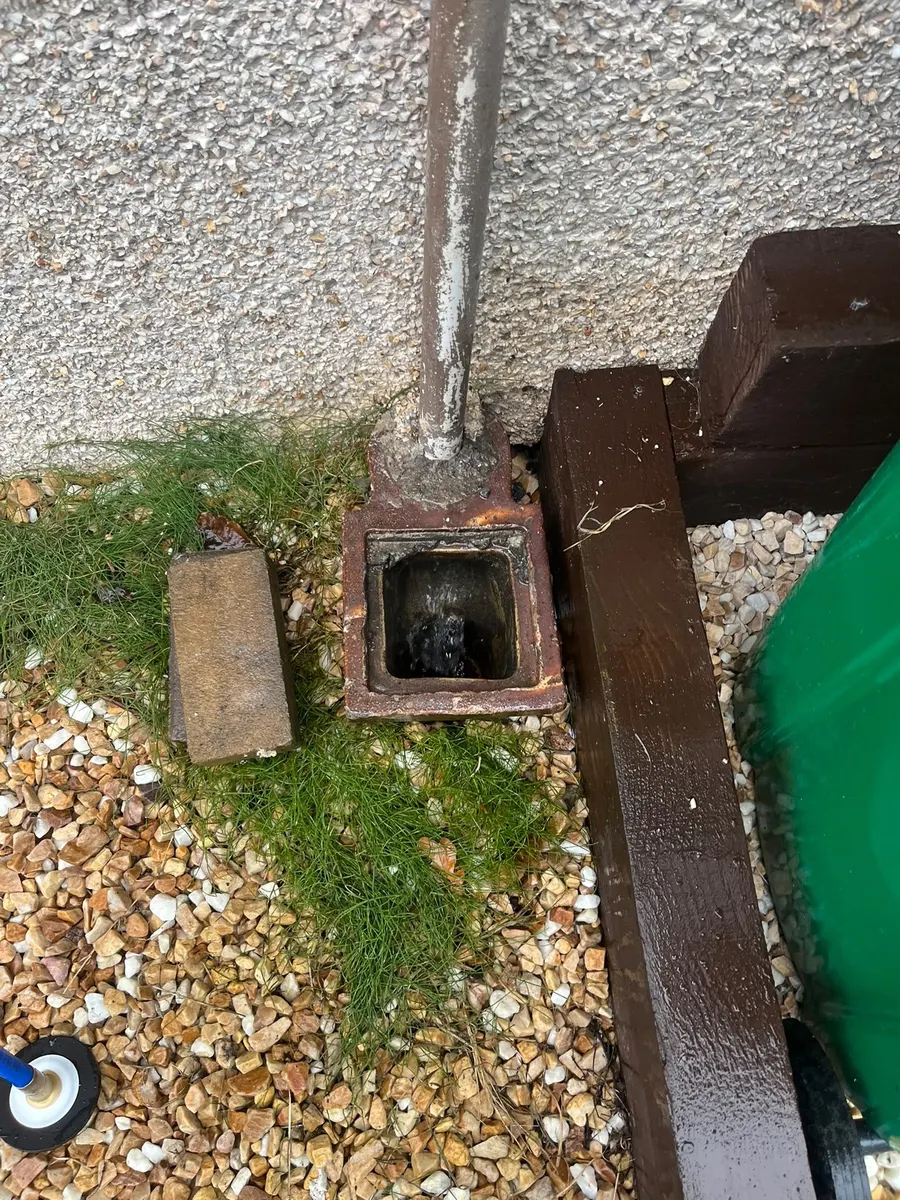
"The gully outside" can mean three different things, and only one of them is yours to clear. Scottish Water says the private drain runs from your home to your property boundary, where it meets the public sewer, and that the homeowner is responsible for it. It also says local authorities are responsible for draining local roads and public highways. So the grating in the road channel belongs to the council, and the small grate at the foot of your downpipe belongs to you.
| Where the gully is | What it looks like | Whose it usually is | Clear it yourself? |
|---|---|---|---|
| Road gully in the kerb channel | A metal grating in the gutter, with water pooling across the road or pavement | The council, as roads authority | Only to lift leaves off the top, where it is safe. Do not stand in the road. Report it if it does not clear. |
| Yard or back gully at your house | A small grate or clay trap at the foot of a downpipe or under a kitchen waste pipe, inside your boundary | You, as private pipework | Yes, to the grate and the trap you can reach. Stop at the point described below. |
| Gully shared with a neighbour | One grate serving two houses, or both your gully and theirs backing up together | Depends on the pipe. A shared run that reaches the street is generally Scottish Water's | Not past the grate. Ring Scottish Water before paying anyone. |
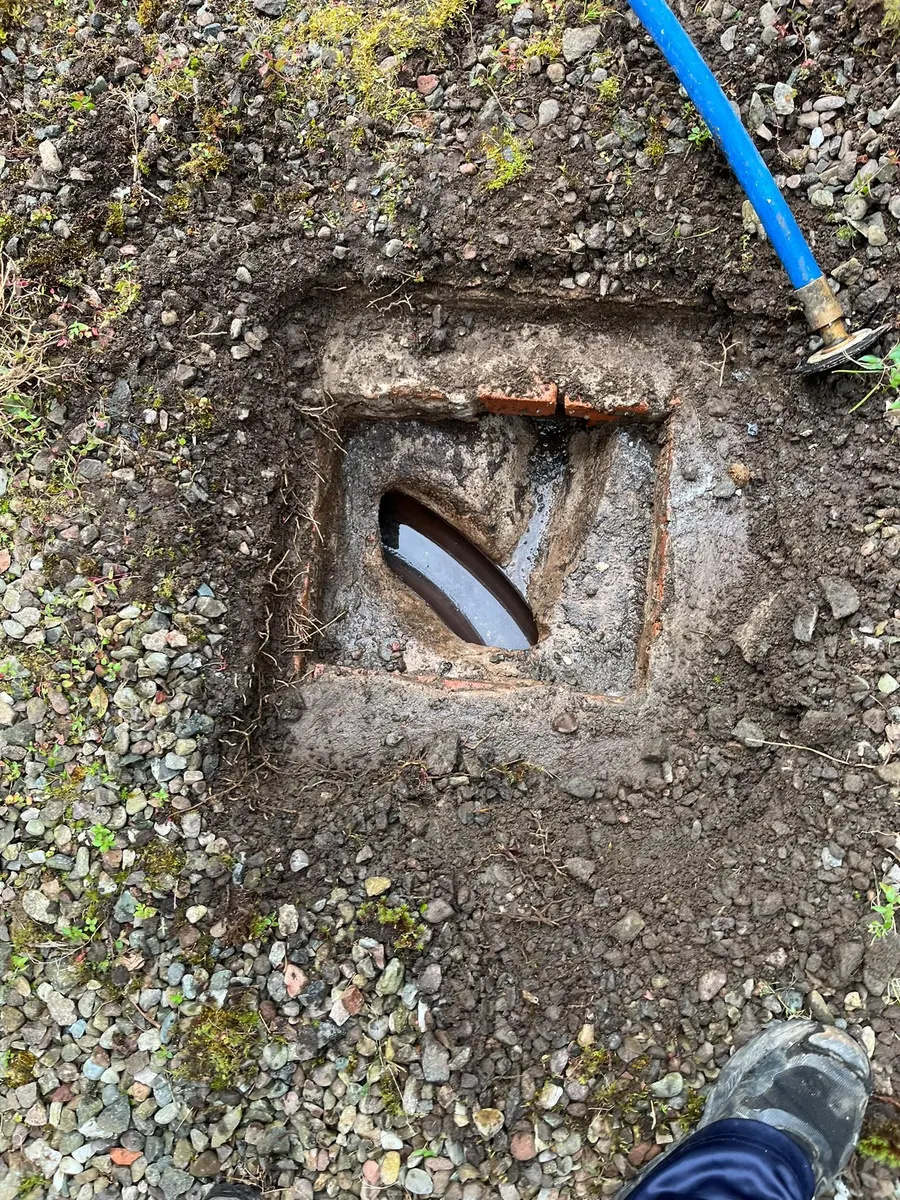
| Inspection chamber | A square or round cover set into the ground, not a grate | You, if it serves only your home | No. Lifting covers and rodding is a drainage engineer's job. |
The table says "usually" because older homes, tenements and shared closes do not always follow the pattern. The full rules are in our guide to who is responsible for blocked drains in Scotland, and the location-by-location version is in our guide to a blocked drain outside the house.
What the councils themselves ask you to do
It helps to know that the councils do not treat leaves on a grate as a job they must do for you. Their own pages say so:
- Falkirk Council. Its "Report it" page, which lists blocked drains under road defects, asks that residents attempt to clear leaves from gully grates in the first instance, where it is safe to do so.
- Clackmannanshire Council. Its flooding page makes the same request, and says most minor flooding in late autumn and early winter happens because drain openings are blocked by fallen leaves.
- Stirling Council. Its blocked drain page, updated 30 July 2026, says falling leaves can be a major cause of blocked drains in autumn and that clearing them away from a drain near your home, when it is safe, can help stop large puddles forming. It also says that if a drain does not clear, the cause is likely a build-up of silt and debris, and to use its form.
Read together, those three pages give you the line between "do it yourself" and "report it". The top of the grate is yours to clear if you can do so safely. A drain that stays blocked after that is a report, and if it is on your own property, a call to an engineer.
Stirling adds one useful point. During heavy rain and icy conditions drains can be slower to clear because of their capacity, not because of a blockage. A gully that backs up for an hour in a downpour and drains away afterwards is not necessarily blocked at all.
The safe way to clear the grate and trap
These steps apply to a gully inside your own boundary, such as the one at the foot of a downpipe. For a road gully, stop after step 3 and do not stand or kneel in the road. They are our practical order of work, built on what the councils ask for, not a requirement from any of them.
- Put protection on first
Waterproof gloves that cover the wrists, old clothes and shoes you can wash. If you have a cut or graze, cover it with a waterproof dressing before you start.
- Look before you touch
Check the grate for broken edges and the ground around it for a stuck cover or loose paving. If the cover is screwed down or stuck, do not force it.
- Lift what is on the grate
Take off leaves, silt and litter by hand or with a trowel, and put it in a bucket or bag, not back down the drain.
- Take the grate off and clear the trap
If the grate lifts out easily, scoop out the silt and debris you can reach with your gloved hand or a trowel. Do not push anything further down the pipe.
- Test it with water
Pour in a bucket of cold water. If it drains away freely, the gully was the problem. Put the grate back.
- Wash up properly
Wash your hands and tools with soap, and wash your clothes. Do this before you eat, drink or touch your face.
That is all the clearing most gullies need. A gully that is clear for a week and blocked again by the weekend belongs in the next section.
Why the gloves and the hand washing matter
A drain can hold more than leaves. The Health and Safety Executive says Weil's disease, a form of leptospirosis, is caught from the urine of infected rats, that the bacteria get into the body through cuts and scratches or through the lining of the mouth, throat and eyes, and that it is rare in the UK. It starts with flu-like symptoms such as headache or muscle pains, and in rare cases is serious. The controls it lists for people who work with drains and sewers are the ones above: wear gloves, wash hands regularly, avoid hand to mouth and hand to eye contact, wash cuts and grazes immediately and cover broken skin. Those are sensible habits for a householder on a ten-minute job too. If you feel unwell with flu-like symptoms after clearing a drain, tell your doctor what you were doing.
The stop point: when clearing the grate is not enough
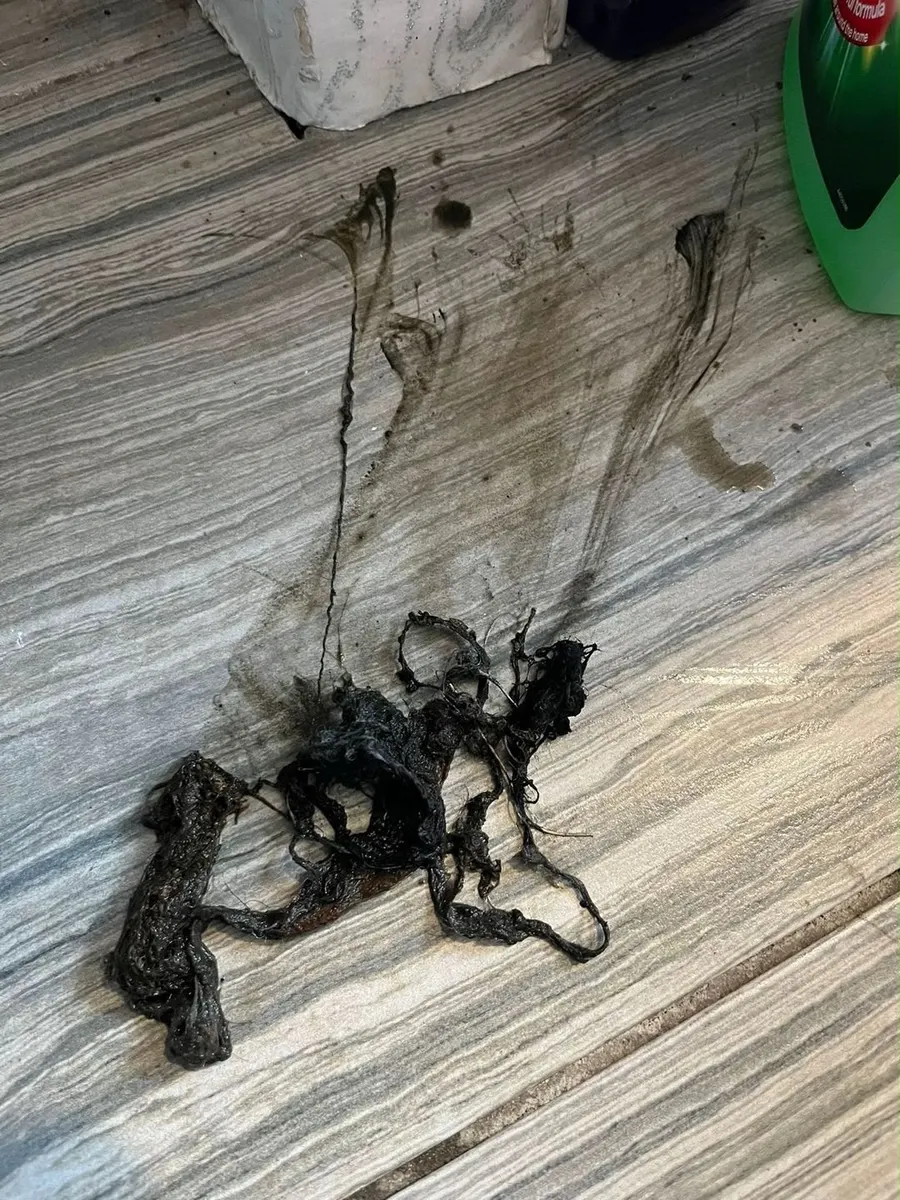
The rule we would give anyone is simple. If the grate is clear and the water still does not go away, stop. The blockage is below the trap, in the pipe, and no amount of poking from the top will help. Pushing a stick or a wire down a gully can pack a soft blockage tighter or damage a clay joint, so leave rodding to someone with the right rods.
| What you see after clearing the grate | What it usually means | What to do |
|---|---|---|
| Water drains, then the gully fills again within days | Silt, grease or roots further down the pipe, or a pipe that has dropped | Book a drainage engineer. A camera survey shows the cause. |
| Water stays standing after the grate is clear | The blockage is below the trap | Stop. Call a drainage engineer, or the council if it is the road gully. |
| Your gully and a neighbour's back up together | A shared run or the public sewer | Ring Scottish Water on 0800 0778 778. |
| A toilet gurgles or a chamber in the garden is full | A blockage in the main drain, not the gully | Do not lift covers yourself. Call a drainage engineer. |
| Sewage, or a smell of sewage, at the gully | A sewer or drain problem | Stay clear, keep children and pets away, and ring Scottish Water. |
| The road gully is blocked and water is across the road | A council gully that needs its own cleaning | Report it to the council. Do not pay a firm to clear a road gully. |
The middle rows are where people lose money. A gully that refills within days is a symptom of something further along the pipe, and clearing it again and again only treats the symptom.
What it costs if the pipe is yours
Fantastic Services' 2026 drain unblocking guide gives these ranges for the UK outside London and the South East, and says its figures include VAT. It also says London and the South East run roughly 15 to 30% higher than the North of England, Wales and Scotland. They are market ranges from a national firm, not CB Drainage prices, and the page does not price gullies separately.
| Job | Typical range, including VAT | When a gully blockage needs it |
|---|---|---|
| Drain rodding | £60 to £90 | A soft blockage just beyond the trap |
| Drain jetting | £70 to £125 | Packed silt, grease or scale along the pipe |
| Typical unblock, all in | £80 to £250 | Most private blockages, depending on access |
| Camera survey | £90 to £200 | The same gully keeps blocking |
One quote question saves money: ask for the total including VAT. GOV.UK gives the standard rate as 20% and says a business must register for VAT once its taxable turnover passes £90,000 in a rolling 12 months, so a small firm may not charge it at all. A £100 quote that is £100 plus VAT is £120. If a camera survey might be needed, ask what is included before anyone starts.
Your side of the boundary?
Get a price on the whole job
Send the photo and details, or call Brian, and ask for the total including VAT before any work starts.
Request a quoteCall 07935 496833Who to ring for each outcome
- Road gully blocked: report it to the council. In Stirling, use the online form on the blocked or broken drain page. In Falkirk, report a road defect on the "Report it" page. In Clackmannanshire, urgent problems go to 01259 450000.
- Water coming into your home from a blocked or broken drain: Stirling Council says its roads team may be able to attend, and gives 01786 404040 for emergency help.
- Sewage or the public sewer: Scottish Water, 0800 0778 778. Stirling's page also points public sewer flooding to Scottish Water.
- Your own gully, trap or drain, after you have cleared what you can reach: a drainage engineer. Tell them where the water is, what you cleared and how fast it refilled. A photo of the grate helps.
When you send details to Brian, include the same things: a photo of the gully, whether a neighbour is affected and how many times it has blocked this year. He can tell you what he thinks the job is before you agree anything. Our drain unblocking cost guide for Stirling and Falkirk has worked examples of what the bill can look like.
Keep reading: Blocked drain in the back garden: causes and fixes.
Blocked gully: common questions
Can I clear a blocked gully outside my house myself?
Yes, if it is a private gully inside your boundary and the blockage is leaves, silt or litter on or just under the grate. Wear waterproof gloves, lift the debris out, put it in a bag and test with a bucket of water. Stop if the water stays up. Falkirk and Clackmannanshire councils both ask residents to clear leaves from gully grates first, where it is safe.
Who clears a blocked road gully in Scotland?
The council. Scottish Water says local authorities are responsible for draining local roads and public highways. Stirling takes reports on its online form, Falkirk lists blocked drains as a road defect on its Report it page and Clackmannanshire takes urgent problems on 01259 450000. Do not pay a firm to clear a road gully.
Why does my gully keep blocking after I clear it?
If it refills within days, the cause is usually further along the pipe: silt, grease, scale, roots or a pipe that has dropped. Clearing the grate treats the symptom. A camera survey shows the cause, and a 2026 UK guide gives about £90 to £200 for one, including VAT.
Is it safe to put my hand in a blocked gully?
Wear waterproof gloves that cover the wrists and cover any cuts first. The HSE says Weil's disease can get into the body through cuts and scratches and through the mouth, throat and eyes, and that it is rare in the UK. Wash your hands afterwards and tell your doctor if you develop flu-like symptoms.
When should I call Scottish Water instead?
Call Scottish Water on 0800 0778 778 if sewage is coming up, if your neighbours' gullies or chambers are backing up too, or if the blockage seems to be in a shared run or past your boundary. Scottish Water says the public sewer network is its responsibility and the private drain to the boundary is the homeowner's.
Keep reading: Toilet still blocked after plunging? What to do next.
Sources
- Falkirk Council: Report it, for blocked drains as a road defect and the request to clear leaves from gully grates first. Checked 15 October 2026.
- Clackmannanshire Council: Flooding advice and information, for leaves on gully grates, the emergency number and the sewer flooding route. Checked 15 October 2026.
- Stirling Council: Report a blocked or broken drain, updated 30 July 2026, checked 15 October 2026.
- Scottish Water: Your Pipes FAQs, for the private drain to the boundary and the public sewer beyond it. Checked 15 October 2026.
- Scottish Water: Flooding and Scottish Water's responsibilities, for local authorities draining local roads and private pipework inside the boundary. Checked 15 October 2026.
- Health and Safety Executive: Leptospirosis / Weil's disease from rats, updated 12 November 2024, checked 15 October 2026.
- Fantastic Services: How much does it cost to unblock a drain? (2026 UK price guide), for the market ranges, including VAT. Checked 15 October 2026.
- GOV.UK: VAT rates and GOV.UK: Register for VAT, for the 20% rate and the £90,000 threshold.