
If a toilet is still blocked after plunging, stop flushing, and try three safe things in order: plunge once more with the cup fully under water, wait, then test with a bucket of water poured in steadily. If the water still will not go away, or the bath, sink or other toilet is slow or gurgling too, the blockage is probably not in the toilet at all but in the drain behind it. That is when you stop and call someone, because pushing wires or chemicals down a pan only makes a drain engineer's job harder. In Scotland the pipe from your house to the boundary is yours to sort out, and the public sewer beyond it is Scottish Water's. This guide shows the three steps, a table for telling a toilet blockage from a main drain blockage, a safe way to look at the outside chamber, and what the job costs. If it is the drain, our drain unblocking service covers Alloa, Falkirk, Stirling and the rest of Central Scotland.
The first minute: stop the flood before you try anything
The mistake that turns a blocked toilet into a wet floor is flushing again to see if it has cleared. Guides we read in today's search results agree on this: if you have flushed once and nothing is happening, do not flush a second time, because the bowl can overflow. Some add that you can stop the cistern refilling by lifting the lid and closing the flapper by hand, and that the cistern water is clean.
Put an old towel round the base of the pan, wear waterproof gloves, and open a window if you can. Then work through the three steps below. They are our practical order of work, built from the council and consumer guides we read, not a requirement from any official body.
- Plunge again, with the cup fully under water
The Stroud, Direct Line and Wickes guides all make the same point: the plunger only works if the cup is covered and sealed. Add water from the sink if the bowl is low. A toilet plunger with a fold-out flange seals better than a flat sink plunger. Push gently first to push out the air, then pull, and repeat for a few minutes. One guide says to allow 15 minutes or more for a blockage to give.
- Wait and watch the level
If the water level is dropping, even slowly, the blockage is soft and moving. Leave it for 15 to 30 minutes before trying again. Pouring in a bucket of warm water (not boiling, which guides warn can crack the porcelain) from waist height can help push a soft blockage on.
- Test with a bucket, not the flush
Pour in a bucket of water steadily. If it drains away at a normal pace, the toilet is clear. If it rises to the rim and sits there, stop. Do not carry on with plunging for an hour: the blockage is either too solid for a plunger or lower down than the toilet.
Some guides then suggest a wire coat hanger, drain cleaner, or reaching into the bowl. Our advice is to stop at step three. A bent wire can scratch the pan or push the blockage into the bend, and caustic drain cleaner is a hazard you leave standing in a pan for whoever comes next. A hand-cranked toilet auger is the one tool that is reasonable to try yourself, and only if you have one and the water is dropping.
Is it the toilet, or the main drain?
This is the question the plunger cannot answer, and it decides who you need. A blockage in the toilet's own bend is usually a problem of what was flushed. A blockage in the drain behind it affects everything that drains the same way. A council guide to unblocking a toilet says that if more than one fitting in the household is blocked, the problem could be in the soil stack or main drainage and will need clearing with rods.
| What you see | What it usually means | What to do |
|---|---|---|
| Only this toilet is slow or blocked, and everything else drains normally | A blockage in the pan or the bend just behind it | Steps one to three above. If the bucket test fails, call a plumber or drain engineer. |
| The water drops slowly after plunging, then rises again | A partial blockage that is not fully cleared, or further down than the pan | Stop plunging. Check the outside chamber (below) before anyone is called. |
| The bath or shower fills or gurgles when you flush, or the downstairs toilet bubbles | A blockage in the main drain or soil stack, shared by every fitting | Do not keep flushing. Call a drainage engineer. |
| The inspection chamber outside is full of water or sewage | A blockage in the drain beyond that chamber | Do not lift any more covers or rod it yourself. Call a drainage engineer. |
| The outside chamber is empty and clean, but the toilet is blocked | A blockage between the toilet and the chamber | Call a plumber or drain engineer. A camera or rods will show where. |
| Neighbours' toilets and drains are slow too, or sewage is coming up in the street | A blockage in the public sewer | Ring Scottish Water on 0800 0778 778. |
The table is built from the symptoms the council and consumer guides describe and from Scottish Water's ownership rules. It is a way to narrow things down, not a diagnosis, and houses with a shared drain or an old layout do not always follow the pattern.
How to look at the outside chamber safely
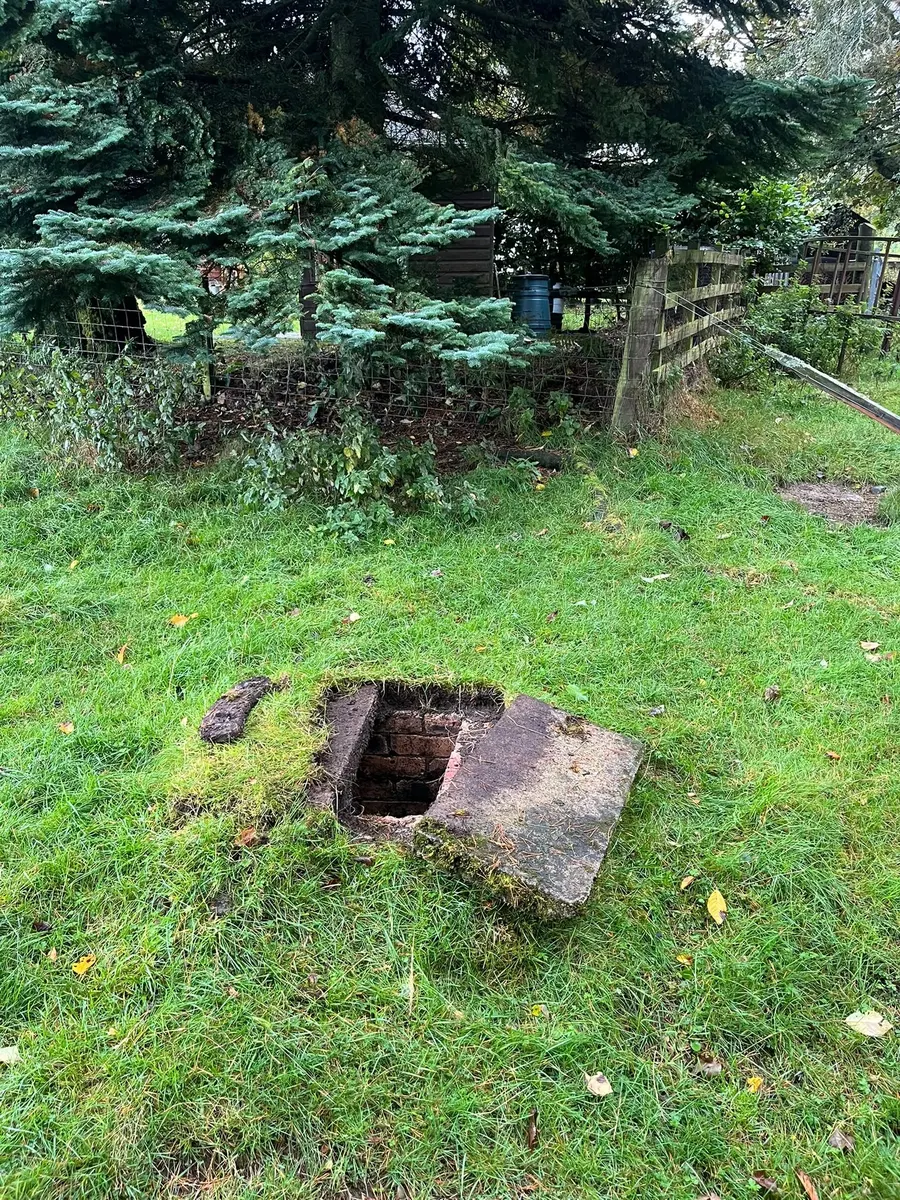
The chamber nearest the bathroom is usually outside close to where the toilet's pipe leaves the house. Guides say that if water is standing in it, the blockage is further along the pipe, and that if it is empty, the blockage is between the toilet and the chamber. That one look can save you from paying for the wrong job. It also needs care, because a chamber can hold sewage and the cover is heavy.
- Put protection on first
Waterproof gloves, old shoes and a waterproof dressing over any cut or graze. Keep children and pets away.
- Check the cover before you lift it
If it is stuck, cracked or screwed down, leave it. Use a lifting key or the right tool and keep your back straight. Do not put your fingers under the edge.
- Look, do not reach
Look down and note whether there is standing water and whether it is clean or foul. Take a phone photo if you can. Do not climb in, do not rod it and do not put your hands into the water.
- Put the cover back and wash up
Replace the cover fully, wash your hands and tools with soap, and wash your clothes before you eat, drink or touch your face.
The Health and Safety Executive says Weil's disease, a form of leptospirosis, is caught from the urine of infected rats, that the bacteria get into the body through cuts and scratches or through the lining of the mouth, throat and eyes, and that it is rare in the UK. Its controls for people who work with drains and sewers are the ones above: gloves, hand washing, covering broken skin. If you feel unwell with flu-like symptoms after dealing with a drain, tell your doctor what you were doing.
What usually causes it, and what not to flush
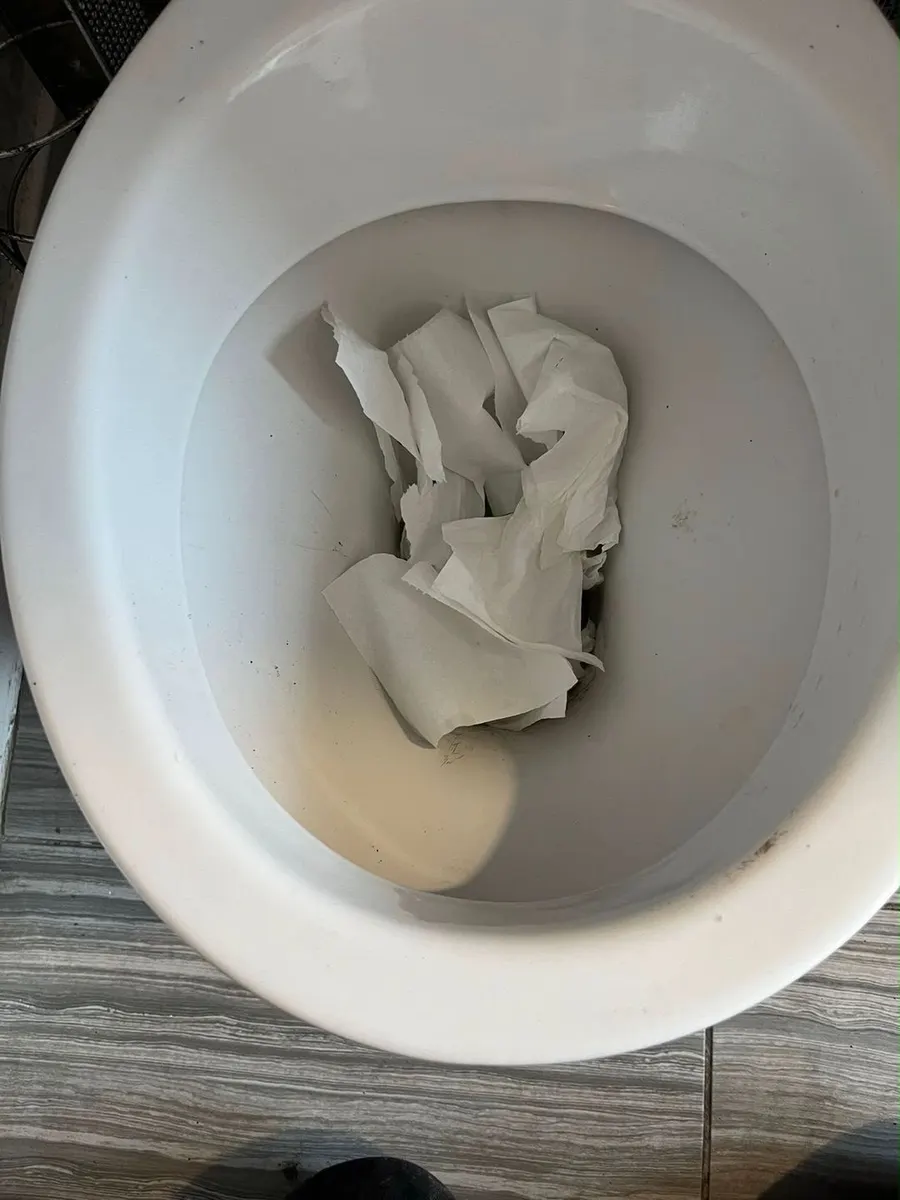
Scottish Water's Nature Calls campaign says about 80% of blockages in its network are caused by the wrong things being flushed, and wipes are its main target. Its rule is to flush only the three Ps, pee, poo and paper, and bin everything else, including wipes sold as flushable, sanitary products, cotton buds and fats, oils and grease. That is advice about the public sewer, but the same items block a house drain, and a wad of tissue on its own can be enough when the pipe is old, rough or partly full. The photograph above shows how little it takes.
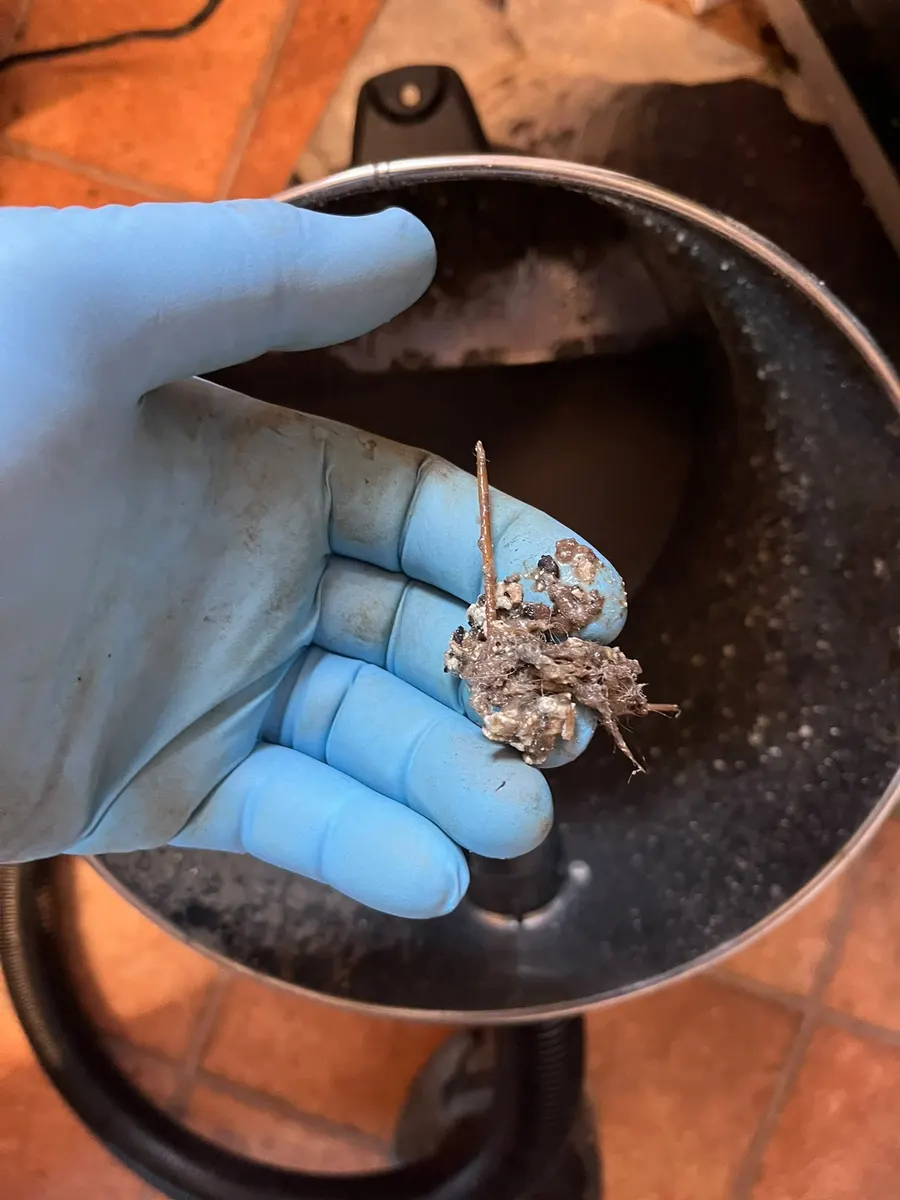
If a blockage keeps coming back with nothing unusual flushed, the cause is probably in the pipe, such as roots, scale or a dropped joint, and a camera survey is the way to find it. Our guide to a blocked gully outside covers the same stop point for the outside grate.
Whose drain is it, and who do you call?
Scottish Water says the private drain runs from your home to the property boundary, where it meets the public sewer, and that the homeowner is responsible for it. Citizens Advice Scotland says homeowners and landlords are responsible for household waste pipes up to where they connect with the public sewer. South Lanarkshire Council tells homeowners to contact their own contractor for a blocked drain on their property. Scottish Water says that if you think the blockage is in the public sewer, you should contact it, and that for private pipework it recommends using licensed plumbers, found through WaterSafe.
In practice that gives you four routes:
- Only the toilet is blocked: a plumber or drain engineer, after your own steps one to three.
- More than one fitting is slow or the chamber is full: a drainage engineer with rods or a jetter, as the drain is yours up to the boundary.
- You rent: tell your landlord first, as drains are the landlord's repair duty unless misuse caused the blockage. Our guide to who pays in a rented home has the detail.
- Neighbours affected or sewage in the street: Scottish Water, 0800 0778 778. Our guide to who is responsible for blocked drains in Scotland shows where the boundary falls.
Check your home insurance or any home emergency cover before you pay anyone. Some policies cover blocked drains and some do not, and a policy may ask for a particular engineer.
What it costs if the drain is yours
Fantastic Services' 2026 drain unblocking guide gives these ranges for the UK outside London and the South East, and says its figures include VAT. They are market ranges from a national firm, not CB Drainage prices, and the page does not price toilets on their own.
| Job | Typical range, including VAT | When a blocked toilet needs it |
|---|---|---|
| Drain rodding | £60 to £90 | A soft blockage in the pipe behind the toilet |
| Drain jetting | £70 to £125 | Packed paper, grease or scale along the pipe |
| Typical unblock, all in | £80 to £250 | Most private blockages, depending on access |
| Camera survey | £90 to £200 | The same toilet keeps blocking |
Ask whether a quote includes VAT. GOV.UK gives the standard rate as 20% and says a business must register for VAT once its taxable turnover passes £90,000 in a rolling 12 months, so a small firm may not charge it. A quote of £85 plus VAT is £85 x 1.2 = £102. A quote of £85 with no VAT is £85. Ask for the total, what it covers (call-out, time on site, disposal) and what happens if the blockage is not where it first looked.
Drain not toilet?
Ask for the total with VAT
Call Brian or send the details through the quote form, and ask whether the price includes VAT before work starts.
Request a quoteCall 07935 496833What to tell whoever you call
A short, exact description saves time on the phone and gets you the right person first. Say:
- which fittings are affected, and which are working normally;
- whether the outside chamber has water in it, and a photo if you took one;
- what you have already tried, and for how long;
- whether it has happened before;
- whether you own or rent the home, and your postcode.
If you are in Alloa, Falkirk, Stirling or nearby and the drain is yours, you can ring Brian on 07935 496833 or send the details and a photo through the quote form on our drain unblocking page. Our guide to a blocked drain outside the house covers the cost and who pays in more detail.
Keep reading: Toilet unblocking cost: what a drain engineer charges and Drain blocked with wet wipes? What to do (and not).
Keep reading: Blocked drain in the back garden: causes and fixes.
Keep reading: blocked toilet drain outside: how to check the chamber.
Toilet still blocked after plunging: common questions
Why is my toilet still blocked after plunging?
Either the blockage is too solid or too far down for a plunger, or the cup was not fully under water so it never sealed. Plunge again with the cup covered. If the water still will not drain, stop, because the blockage may be in the drain behind the toilet.
Should I flush again to see if it has cleared?
No. If you have flushed once and nothing happened, a second flush risks the bowl overflowing. Test with a bucket of water poured in steadily instead.
How do I tell if it is the toilet or the main drain?
If only the toilet is blocked, it is probably the pan or the bend behind it. If the bath or other fittings are slow or gurgle too, or the outside chamber is full of water, the blockage is in the main drain and needs rods or a jetter.
Who is responsible for a blocked drain at my home in Scotland?
Scottish Water says the private drain runs from your home to your property boundary and that the homeowner is responsible for it. Beyond the boundary, the public sewer is Scottish Water's. If you rent, tell your landlord first.
Is it safe to use drain cleaner on a blocked toilet?
We would not. Caustic cleaner can splash back and leaves a hazard in the pan for whoever comes next. Stop after three safe steps and get it looked at.
What does it cost to have a blocked toilet drain cleared?
Fantastic Services' 2026 guide gives UK market ranges including VAT of £60 to £90 for rodding, £70 to £125 for jetting and £80 to £250 for a typical unblock. These are market ranges, not CB Drainage prices. Ask whether any quote includes VAT.
Sources
- Scottish Water: Your Pipes FAQs, for the private drain to the boundary and the public sewer beyond it. Checked 21 October 2026.
- Scottish Water: Drains and sewers guide, for private pipework, licensed plumbers and WaterSafe. Checked 21 October 2026.
- Scottish Water: Nature Calls campaign, for the three Ps, wipes and the share of blockages caused by flushed items. Checked 21 October 2026.
- Citizens Advice Scotland: Public sewerage, for where the homeowner's responsibility ends. Checked 21 October 2026.
- South Lanarkshire Council: Blocked drains, for the council's advice to use your own contractor on private drains. Checked 21 October 2026.
- Stroud District Council: How to unblock a toilet, an English council guide used only for the plunging method and the one-fitting versus several-fittings test. Checked 21 October 2026.
- HSE: Leptospirosis and Weil's disease, for the hygiene controls when working with drains. Checked 21 October 2026.
- Fantastic Services: How much does it cost to unblock a drain? (2026 UK price guide), for the market ranges, including VAT. Checked 21 October 2026.
- GOV.UK: VAT rates and GOV.UK: Register for VAT, for the 20% rate and the £90,000 threshold.