
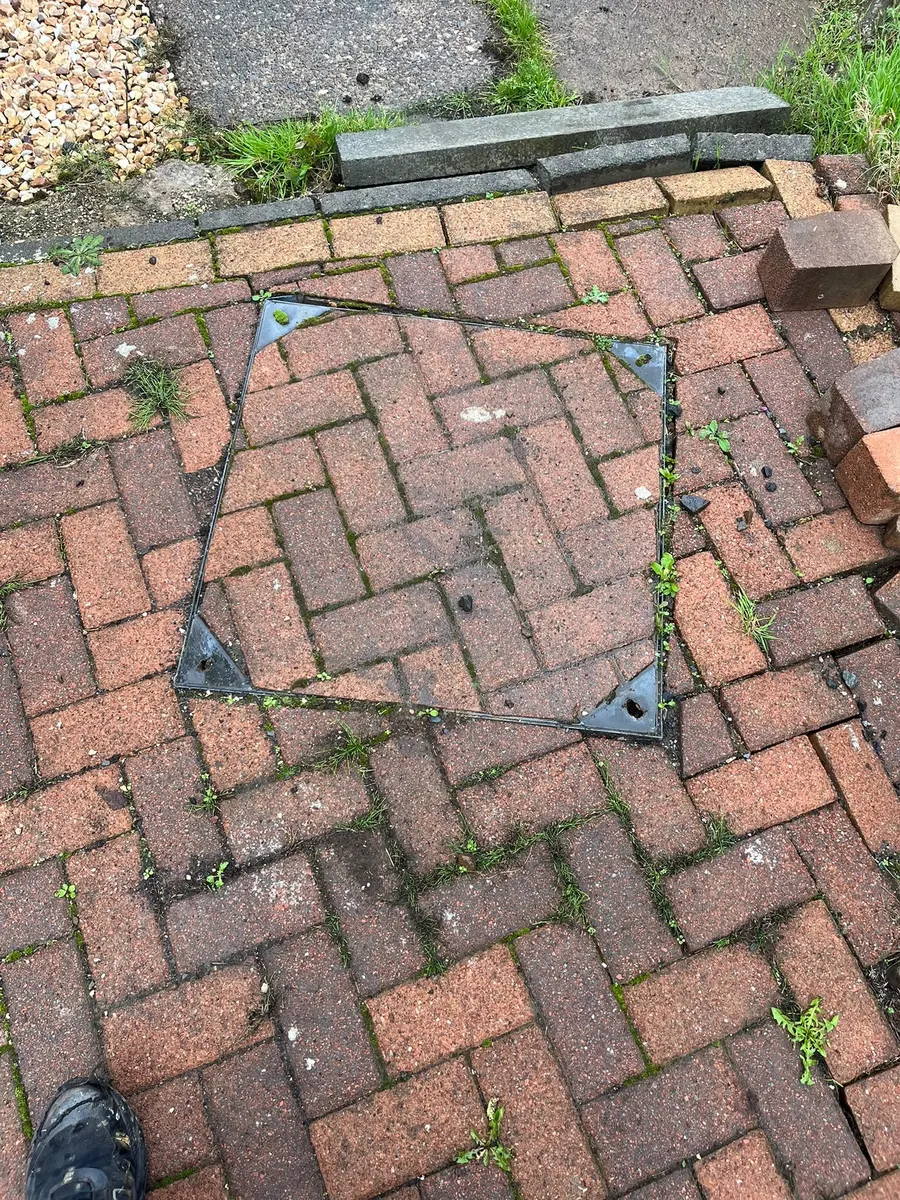
The owner of a blocked drain in the road depends on what is in it. Rainwater that will not leave a road gully is normally the council's job, because Scottish Water's own factsheet says surface water flooding in road gullies is usually the responsibility of the local authority. Sewage, or a public sewer that has choked or overflowed, is Scottish Water's, and its line is 0800 0778 778, open 24 hours. Anything inside your boundary that serves only your home, including the pipes at the foot of your own downpipes, is yours. This guide gives you a table that matches what you can see to the right number, the route each of the Stirling, Falkirk and Clackmannanshire councils asks you to use, what happens after you ring Scottish Water, and the one rule that can put the duty on you when water runs off your land onto the road. If it does turn out to be your own pipe, our drain unblocking service covers Alloa and Central Scotland.
Start with what the water is, not where it is
People ask "whose drain is it?" and then look at the kerb. The better first question is what is coming up, because the same stretch of road can have a council gully, a Scottish Water sewer and a private pipe under it, all within a few metres. Scottish Water says it has the public drainage duty and helps protect homes from flooding caused by sewers overflowing or becoming blocked, that local authorities are responsible for the drainage of local roads and public highways, and that private pipework within a property boundary belongs to the homeowner. The table turns those three statements into things you can see. It is our own reading of the sources below, so treat a row as a strong hint and not a ruling on your particular street.
| What you see | Whose job it usually is | Who to contact | Why |
|---|---|---|---|
| Rainwater pooling at a road gully, or running across the road because the grating is clogged | The council, as roads authority | Your council's online report form | Scottish Water: surface water flooding in road gullies is usually the local authority's responsibility |
| Sewage, toilet paper or a sewage smell in the road, or a manhole cover lifting or overflowing | Scottish Water, if it is the public sewer | Scottish Water on 0800 0778 778 or its online portal, 24 hours | Scottish Water: it helps protect homes from flooding by sewers that overflow or become blocked |
| Sewage or dirty water inside your home or in your garden | Scottish Water if the public sewer has failed, otherwise you | Scottish Water first, and your insurer whatever the cause | Scottish Water: if flooding comes from a blockage in a public sewer it will clear it; private drains inside the boundary are the owner's |
| Water or sewage coming up from a gully or chamber inside your boundary, with the road dry | You, for pipes serving only your home | A drainage engineer, or your landlord if you rent | Scottish Water: private pipework within the boundary is the homeowner's |
| Water, mud or waste from your land running out onto the road | You, as owner or occupier | Fix the cause, and expect the council to write if it does not stop | Roads (Scotland) Act 1984, section 99 |
| Flooding on a motorway or major trunk road | Transport Scotland, for its drainage | Not one of the three routes above | Scottish Water factsheet: motorway and major trunk road drainage is Transport Scotland's |
Two rows need a warning. The first is that a road gully and a sewer are not always separate. Scottish Water's factsheet says that although roads drainage is the local authority's responsibility, many road drains were historically connected to Scottish Water's combined sewers. So a council gully can back up because the sewer it empties into is struggling, and the council and Scottish Water may both end up involved. The second is that "surface water" and "sewage" are different problems. Edinburgh's own gully report page says that if raw sewage is present it is not a roads drainage issue, and outside the property boundary it is generally Scottish Water's. Look at what is in the water before you pick a number.
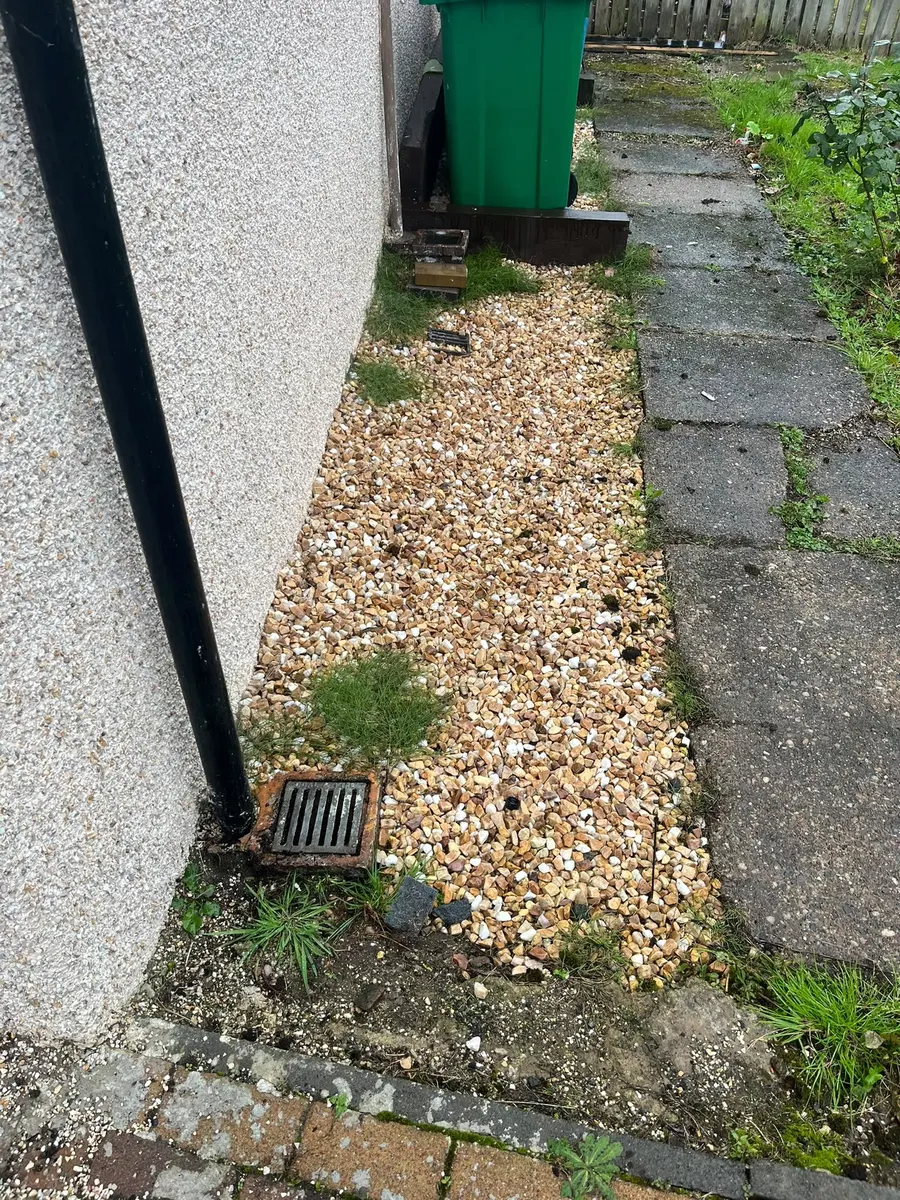
The three councils in our area: where to report it
Each council runs its own report route and none of the three works exactly like another. We opened each page on 11 November 2026 and the table records only what the page itself says. Where a page is silent, the cell says so.
| Council | Route for a blocked road drain | What it asks for or says | Urgent case |
|---|---|---|---|
| Stirling Council | An online form titled "Report a blocked or broken drain" | Contact details and the location of the drain | If water is coming into your home because of a drain problem, call 01786 404040 |
| Falkirk Council | The "Report it" page lists "Road defect" for potholes, trip hazards and blocked drains, which leads to the road defect form on MyFalkirk | The form lets you sign in or continue without an account | The pages we opened give no phone number for this |
| Clackmannanshire Council | Its roads page says to report issues with roads, streets and pavements through the online Report It function, by email to customerservice@clacks.gov.uk or by phone on 01259 450000 | The pages we opened have no page written specially for blocked gullies, so the general road fault route applies | The pages we opened give no separate emergency line for drains |
Scottish Water's own sewer flooding page sends the same message from the other side. It says that to report flooding from the roads, or problems with highway gullies or ditches, you should contact your local council. So if you ring Scottish Water about a clogged gully it will probably send you back to the council, and if you report a sewage overflow to the council it will probably send you to Scottish Water. Choosing correctly at the start saves a day. Our guides to a blocked gully outside and to a blocked drain outside the house cover what you can safely do with the gully on your own side of the boundary.
If it is Scottish Water: what happens after you ring
Scottish Water's page says that for public sewer flooding you should call 0800 0778 778 or use its online portal, that someone is there 24 hours a day, and that you should contact your insurance company whatever caused the flooding. It then splits the response by where the water is. Internal flooding gets a response as soon as possible. External flooding, which is the usual case for a road, is attended "as soon as we can", with priority given to customers in greatest need, such as those with internal sewer flooding and those at greater risk, such as the elderly and disabled. On what happens next, the same page says it will usually attend within 4 hours for an internal flood and within 24 hours for an external flood, and that extreme weather can change those times.
That 24 hours matters if you are standing next to an overflowing manhole and expect a van in ten minutes. It also explains why the first call should be the right one. Those are Scottish Water's figures for its own service. They are not a promise from CB Drainage, and nobody should read them as one.
The factsheet adds three points that most guides leave out:
- It clears a public sewer blockage. If flooding is caused by a blockage in a public sewer, Scottish Water will clear it, and where waste water has flooded your home it carries out a clean-up.
- Help is not the same as liability. Scottish Water says compensation for sewer flooding is paid only where it has been found to be liable, that liability depends on whether it was negligent, and that it is not liable where the cause was outside its control, such as severe weather or items that should not have gone down the pipe.
- Your insurer comes first. It advises customers to contact their own insurer first, because an insurer does not normally need to establish liability before starting work, while Scottish Water has to.
If the cause turns out to be "private", the factsheet says to contact a licensed plumber, or your landlord or the council if the property is rented. For the rented case, our guide to blocked drains, landlord or tenant has the repairing standard.
When it is your pipe, and the road rule most people miss
Scottish Water says the homeowner is responsible for private pipework or guttering within the property boundary. That is the pipe from your house to where it meets the public sewer, plus the gullies at the foot of your downpipes. Our guide to who is responsible for blocked drains in Scotland has the fuller rules for shared drains and where the boundary falls.
There is also a duty running the other way. Section 99 of the Roads (Scotland) Act 1984, headed "Prevention of flow of water etc. onto roads", says the owner and the occupier of land must prevent any flow of water, or of filth, dirt or other offensive matter, from the land onto the road. The roads authority can serve a notice requiring specified works within 28 days, the person served can refer it to the sheriff, and failing to comply with the duty is an offence. We are not saying the council will pursue a neighbour for one overflowing gully. We are saying that a private drain surcharging onto the road is a recognised problem in the Act, so a council that finds your pipe is the cause can point to the law. That is a good reason to deal with a repeat overflow on your own side before it becomes a letter.
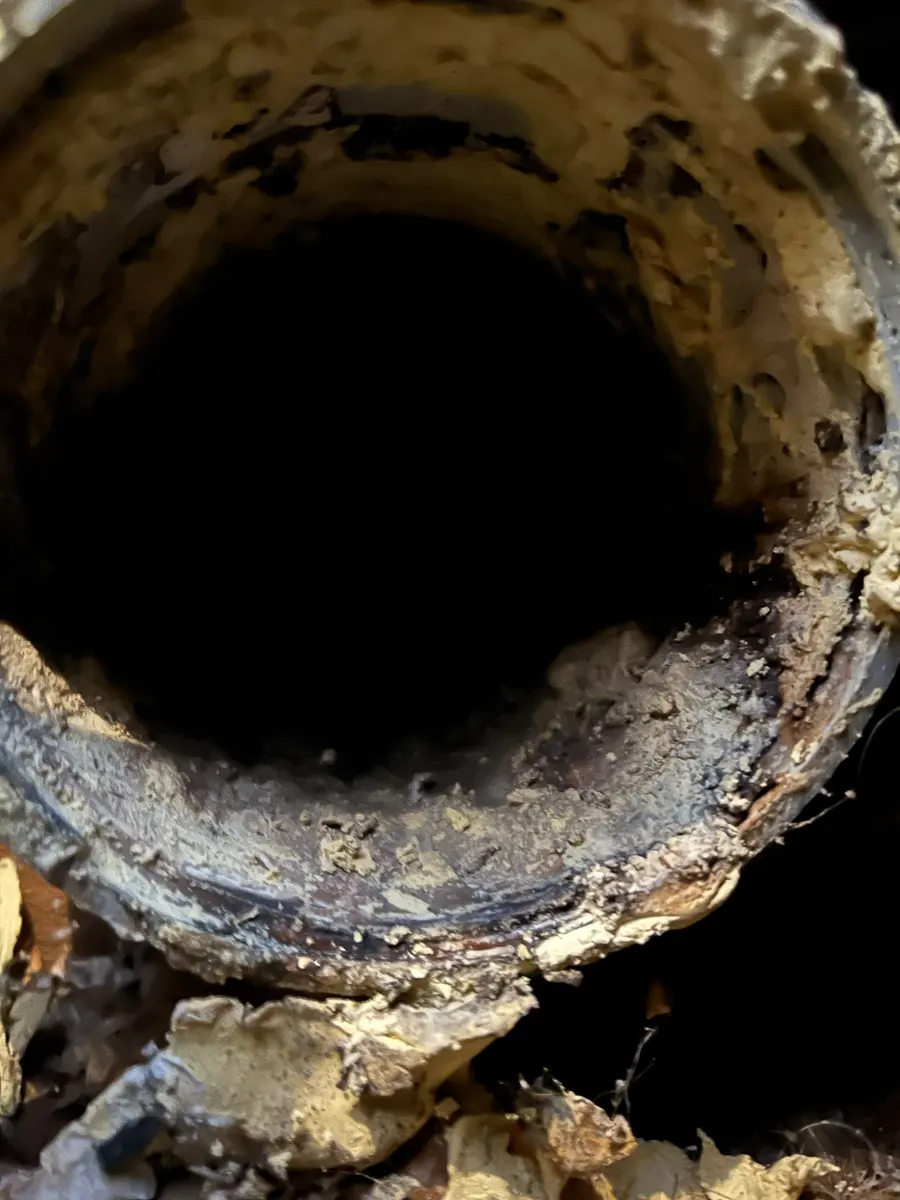
A fault inside your own pipe also tends to be found by camera, not guesswork, and it does not matter whether the water first appears at the road. A build-up like the one below sits in the pipe, not at the road gully.
Six things to note before you report it
A report that names the exact spot and describes the water gets sent to the right team the first time. This order of work is our own suggestion, not a requirement from any council or from Scottish Water.
- Find the spot
Note the street name and the nearest house number or lamp post. Stirling's page asks for the location of the drain, so a vague "outside the shops" costs a day.
- Say what the water is
Clear rainwater, brown water or sewage. Sewage goes to Scottish Water. Rainwater from a gully goes to the council.
- Say what it is doing
Pooling, running across the road, or lifting a cover. A manhole cover lifting is a different job from a clogged grating.
- Check whether it is in anyone's home
Internal flooding changes the priority at Scottish Water, and at Stirling it is the case for the emergency number.
- Take photographs, and a short video if it is safe
Stay out of the carriageway. A photo of the grating, the water and the street name is worth more than a paragraph.
- Note whether it is dry or wet weather
Scottish Water says surface water flooding can happen when the sewers and drains are working but cannot cope with the volume or intensity of rain. A gully that fills in a downpour and empties afterwards is not necessarily blocked.
Think it is your own pipe?
Ask for a look before you pay for a clear-out
Call Brian or use the quote form, describe where the water appears, and ask what he would check first.
Request a quoteCall 07935 496833What changes the answer
- The road is not on the council's list. The 1984 Act says a local roads authority must manage and maintain the roads entered in its list of public roads. Clackmannanshire Council publishes a searchable adopted roads database. A private or unadopted street, such as part of a new estate, may not be the council's to drain, so ask who maintains it before you report. Our responsibility guide has the wider rules on who owns which pipe.
- It is a motorway or major trunk road. The drainage is Transport Scotland's, according to Scottish Water's factsheet, so a council form may not be the right route.
- It is heavy rain, not a blockage. Scottish Water says its sewers cannot always cope with more intense storms, and that many combined sewers are unable to cope with increasing volumes of surface water. Reporting is still right, but a blockage may not be the cause.
- It keeps coming back. If your own gully or chamber is the one backing up, a repeat is usually a fault in the pipe. A camera survey shows the cause, and our guide to whether Scottish Water unblock drains explains what Scottish Water does and does not unblock.
If you cannot tell whether the problem is public or private, a photo and a description sent to Brian is a fair place to start. He can say what he thinks it is before you agree to anything, and if it is the council's or Scottish Water's, he will tell you so. Use the quote form or ring 07935 496833.
Customer reviews
What customers say
Arrived within an hour, identified the issue and cleared it.
Fast response time and very professional.
Blocked drain in the road: common questions
Who is responsible for a blocked drain in the road in Scotland?
It depends on what is blocked. Scottish Water says local authorities are responsible for the drainage of local roads and public highways, and that surface water flooding in road gullies is usually the local authority's responsibility. Scottish Water is responsible for public sewers. Private pipework inside your property boundary is the homeowner's.
Who do I call about sewage in the road?
Call Scottish Water on 0800 0778 778 or use its online portal. Scottish Water says someone is available 24 hours a day. Edinburgh Council's gully page also says raw sewage is not a roads drainage issue and is generally Scottish Water's outside the property boundary.
How do I report a blocked road gully in Stirling, Falkirk or Clackmannanshire?
Stirling Council has an online form called Report a blocked or broken drain, and asks for contact details and the drain's location. Falkirk Council lists blocked drains under its Road defect report. Clackmannanshire Council asks you to report road issues through its Report It function, by email to customerservice@clacks.gov.uk or by phone on 01259 450000.
How quickly does Scottish Water respond to sewer flooding?
Scottish Water says it will usually attend within 4 hours for an internal flood and within 24 hours for an external flood, and that extreme weather can change this. It prioritises customers in greatest need. These are Scottish Water's figures, not a promise from CB Drainage.
Can the council make me stop water running from my property onto the road?
Section 99 of the Roads (Scotland) Act 1984 says owners and occupiers must prevent water, filth, dirt or other offensive matter flowing from their land onto the road. The roads authority can serve a notice requiring works within 28 days, and failing to comply with the duty is an offence.
What if I am not sure whether it is public or private?
Note where the water appears and what it is, take photographs and send them to Brian, who can say what he thinks it is before you agree to anything. If it turns out to be the council's or Scottish Water's, ring the right one.
Sources
- Scottish Water: Flooding and Scottish Water's responsibilities, for the split between Scottish Water, local authorities and Transport Scotland, the homeowner's private pipework and the 24 hour number. Checked 11 November 2026.
- Scottish Water: Report sewer flooding, for how to report, the 4 hour and 24 hour response times, the insurer advice and the council route for road gullies. Checked 11 November 2026.
- Scottish Water: Factsheet 13, Flooding responsibility explained, for road gullies, combined sewers, liability and compensation. Checked 11 November 2026.
- Stirling Council: Report a blocked or broken drain, for the online form and the emergency number. Checked 11 November 2026.
- Falkirk Council: Report it, and its report a road defect form, for blocked drains listed as a road defect. Checked 11 November 2026.
- Clackmannanshire Council: Road Works Report, Roads and Footway maintenance and List of Public Roads, for the road fault route, the roads team and the adopted roads database. Checked 11 November 2026.
- legislation.gov.uk: Roads (Scotland) Act 1984, section 1, for the duty to manage and maintain roads on the list of public roads. Checked 11 November 2026.
- legislation.gov.uk: Roads (Scotland) Act 1984, section 99, for the duty to prevent water or filth flowing from land onto a road. Checked 11 November 2026.
- The City of Edinburgh Council: Report a gully problem, for the statement that raw sewage is not a roads drainage issue. Checked 11 November 2026.