
Scottish Water clears blockages in the public sewer, and its own factsheet mentions no charge to the householder for that. It does not clear your private drain, the pipe that runs from your home to your boundary. That one is yours, or your landlord's if you rent. So the answer depends on where the blockage sits, and the quickest way to find out is to ring Scottish Water on 0800 0778 778 before you pay anyone.
What Scottish Water says it will do
The clearest statement comes from Scottish Water's own factsheet on flooding responsibility. It says Scottish Water is responsible for operating the public foul and combined sewers, and for managing problems caused by sewers flooding or becoming restricted by chokes or collapses. On blockages it is direct: if flooding is caused by a blockage in a public sewer, Scottish Water will clear the blockage. The same factsheet says that if your home has been flooded by waste water from its sewers, Scottish Water will carry out a clean-up, covering excess liquid, sewage debris and disinfecting the area.
Nothing in that factsheet puts a price on any of it. The one qualification is worth reading closely, though. Scottish Water says that while it may offer support in many cases of sewer flooding, it does so as a goodwill gesture that depends on the individual circumstances. So "free" is a fair way to describe clearing a public sewer, but it is not a guarantee of everything you might want afterwards.
On the other side of the line, Scottish Water's own pipes page is equally plain. The private drain removes waste water from your toilet and sinks, runs from your home to your property boundary where it meets the main public sewer, and the homeowner is responsible for that pipe. Its flooding page says the same of private pipework and guttering inside the boundary. Where the problem is private, its factsheet recommends contacting a licensed plumber, or your landlord or council if the property is rented.
What Scottish Water covers, and what stays with you
| Situation | Does Scottish Water deal with it? | What to do |
|---|---|---|
| Blockage in the public sewer that is causing flooding | Yes. Its factsheet says it will clear the blockage | Ring 0800 0778 778 and say you suspect the public sewer |
| Sewage has flooded inside your home from its sewer | It carries out a clean-up, as a goodwill service that depends on the circumstances | Ring it, then tell your insurer |
| Damage to belongings or the building | Only where it is found liable, which depends on negligence | Claim on your own insurance first |
| Blocked private drain, from your home to the boundary | No. The homeowner is responsible for this pipe | Call a drainage engineer, or your landlord if you rent |
| Blocked road gully or street drain | No. Local roads drainage is the council's | Report it to your council. Leaves on the grate are worth clearing first: see our blocked gully guide |
| Rented home, blockage in a private drain | No. Its factsheet points tenants to the landlord or council | Report it to the landlord in writing |
Why "free" needs care
Two things get mixed up when people ask whether Scottish Water will do it for free. One is clearing the blockage. The other is paying you back for the mess, the lost carpet or the engineer you called first. They are separate, and Scottish Water treats them separately.
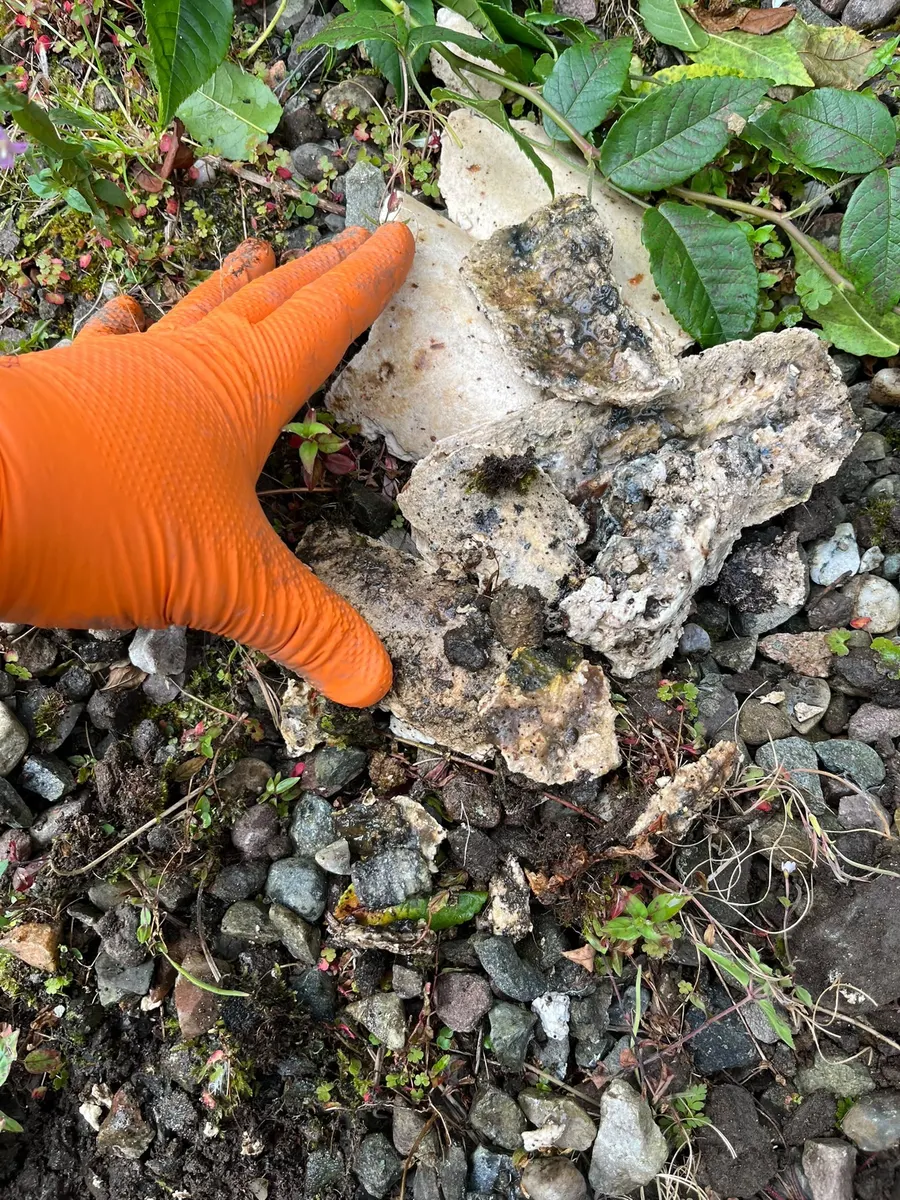
Its factsheet says compensation for damage caused by sewer flooding is paid only where Scottish Water has been found liable, and that liability depends on whether it has been negligent. It adds that although the sewer is its responsibility, it has little control over what goes into it, so the vast majority of blockages are caused by inappropriate items or unforeseen events. In those circumstances it says it is not liable for damage. Wipes, fat and other things that should never have gone down the pipe are the usual causes, which is why a blockage can be Scottish Water's to clear yet still leave you without compensation.
That is also why the factsheet advises people to contact their own insurer first if they have cover. Your insurer does not normally need to establish liability before work starts, whereas Scottish Water has to establish liability before it can consider compensation, which can take longer. It also warns that failing to tell your insurer about flooding can jeopardise a later claim.
The question that decides everything: where is the blockage?
Scottish Water's boundary rule is the one to work from. A drain that serves only your home and sits on your land is private. From the point a drain leaves your property, or joins drains from another property's land, it is generally a public sewer. Our guide on who is responsible for blocked drains in Scotland sets out that rule and the 1968 Act definitions in full, including the point that a shared pipe is not automatically public. Here is how to apply it in a few minutes, without a camera.
- How widespread is it? One slow sink points at that waste pipe. Every fitting backing up points at the drain outside.
- Is next door affected? If neighbours on the same run have the same trouble, the blockage may be further down, in a shared pipe or the public sewer.
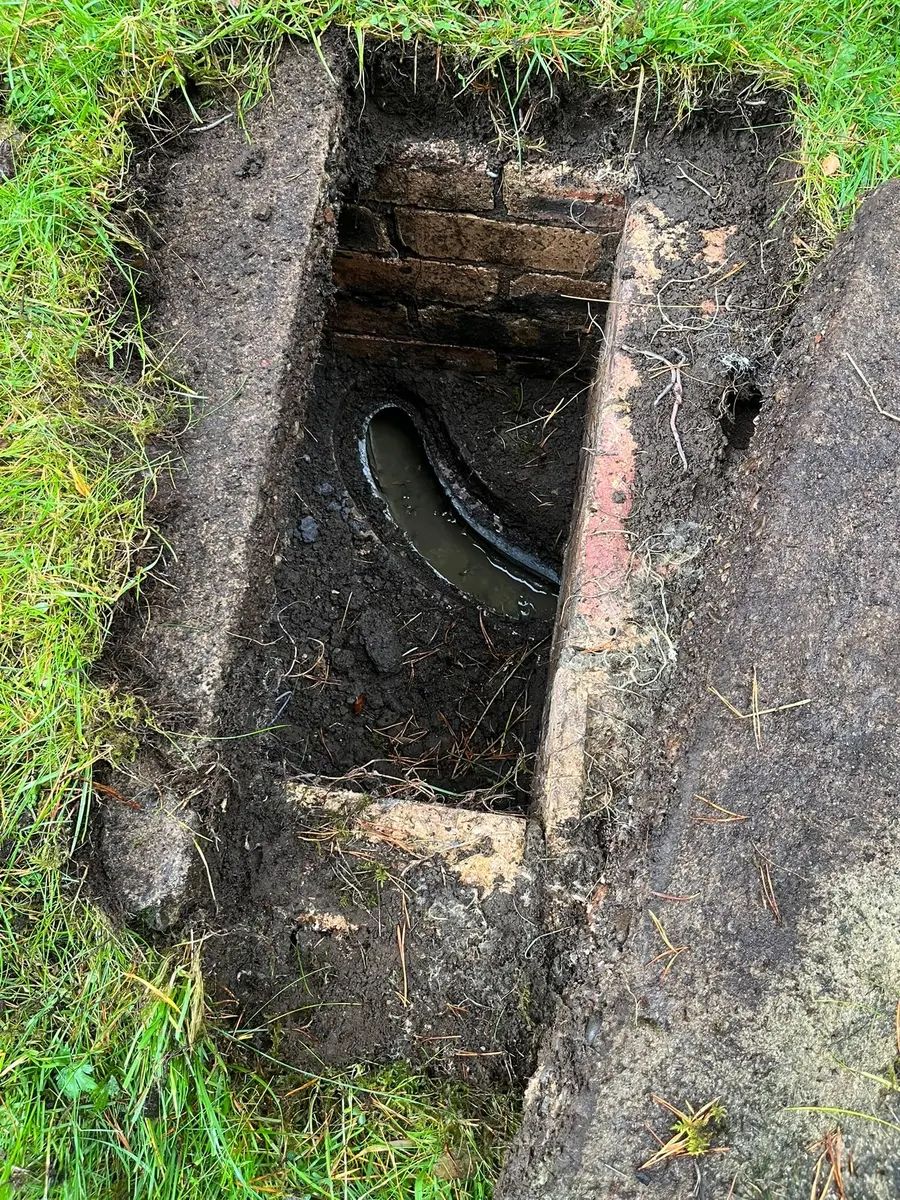
- What does the outside chamber show? If it is safe to lift the cover, a full chamber means the blockage is downstream of it. Never climb into a chamber.
- Where does your land end? Note whether the pipe stays on your side of the boundary, because that is where a private drain stops.
None of this is certain from the surface. A blockage that backs up from beyond the boundary looks exactly like one a few metres inside it. When you cannot tell, a CCTV drain survey shows the pipe from the inside and where the obstruction sits, and that location is what settles who pays.
Ring first or engineer first? A five-step check
- Stop using water
Every flush and tap adds to what is backing up.
- Work out how widespread it is
One fitting, the whole house or the whole street? Ask next door.
- Photograph it with the date
The water level in the chamber, or any sewage inside, taken before anything is cleared.
- Ring Scottish Water if the public sewer is possible
0800 0778 778, which its website says is answered 24 hours a day, 7 days a week. Ask whether it will attend and whether there is any charge.
- If it is private, call a drainage engineer
Or report it to your landlord in writing if you rent, and keep a copy.
Ringing first takes a few minutes and can save a call-out. If Scottish Water says the problem is private and you have already decided to get it cleared, you have lost only a few minutes. If it turns out to be the public sewer, you have saved the bill.
Blocked drain and not sure who pays?
Get it looked at, with a record
Send Brian a photo of the chamber with the cover lifted, or call him, and ask what he would check first.
Request a quoteCall 07935 496833If you paid a firm first and it was Scottish Water's after all
This happens, because the surface looks the same. The Scottish Public Services Ombudsman has published decisions on exactly this, and they are useful as examples, though they are from 2014 and are not a promise of a refund today.
In one case, a couple was told by Scottish Water that a blocked drain was their problem. They instructed contractors, who found the blockage was under the public footpath and for Scottish Water to address. Scottish Water later confirmed that was correct, but first refused to refund the cost on the grounds that it had no legal liability, and then offered half. The Ombudsman found the blockage was entirely Scottish Water's responsibility, upheld the complaint about the costs and recommended that it repay them. It also found that Scottish Water could have asked to do the access work itself, or installed an access chamber from the public side, at its own cost.
In another, a householder checked Scottish Water's website, read that a blockage on private land is the owner's responsibility, and paid contractors. She then concluded she should have reported it to Scottish Water. Scottish Water accepted its pipe-responsibility information might not have been as easy to find as it could have been, and, as a goodwill offer, said it would cover the full cost of the work.
The common thread is evidence. The householders who got their money back could show where the blockage was. If you do pay for a clearance, ask the engineer to note exactly where the blockage was and, where a camera survey was done, keep the footage. If it turns out to be the public sewer, that record is what you take to Scottish Water, and if it refuses, to the Ombudsman. Brian will tell you honestly if what he finds is not your drain to pay for.
When the drain is yours: what to ask before you agree a price
If the blockage is in your private drain, you pay, and quotes are not all alike. Our guide to drain unblocking costs in Stirling and Falkirk shows the market ranges by method. Whatever the figure, ask these before work starts, so you can compare like with like:
- Is VAT included? A business must register for VAT once its taxable turnover passes £90,000, and then adds 20%. A £100 price is £120 with VAT, so two quotes that look the same can be 20% apart.
- What does the price cover? Call-out, labour, the method used and any waste disposal.
- What happens if the blockage turns out to be Scottish Water's? A firm that will tell you so, and show you the evidence, is worth more than one that clears anything and bills for it.
- Will you get a written note of what was found and where? That is your record for the landlord, your insurer or Scottish Water.
The Consumer Rights Act 2015 says that where no price has been agreed, you pay a reasonable one. That is a safety net, not a plan. Agree the price first. If you rent, you should not be arranging or paying for a blocked underground drain at all, so check the guidance in our renting section before you ring anyone.
Keep it from happening again
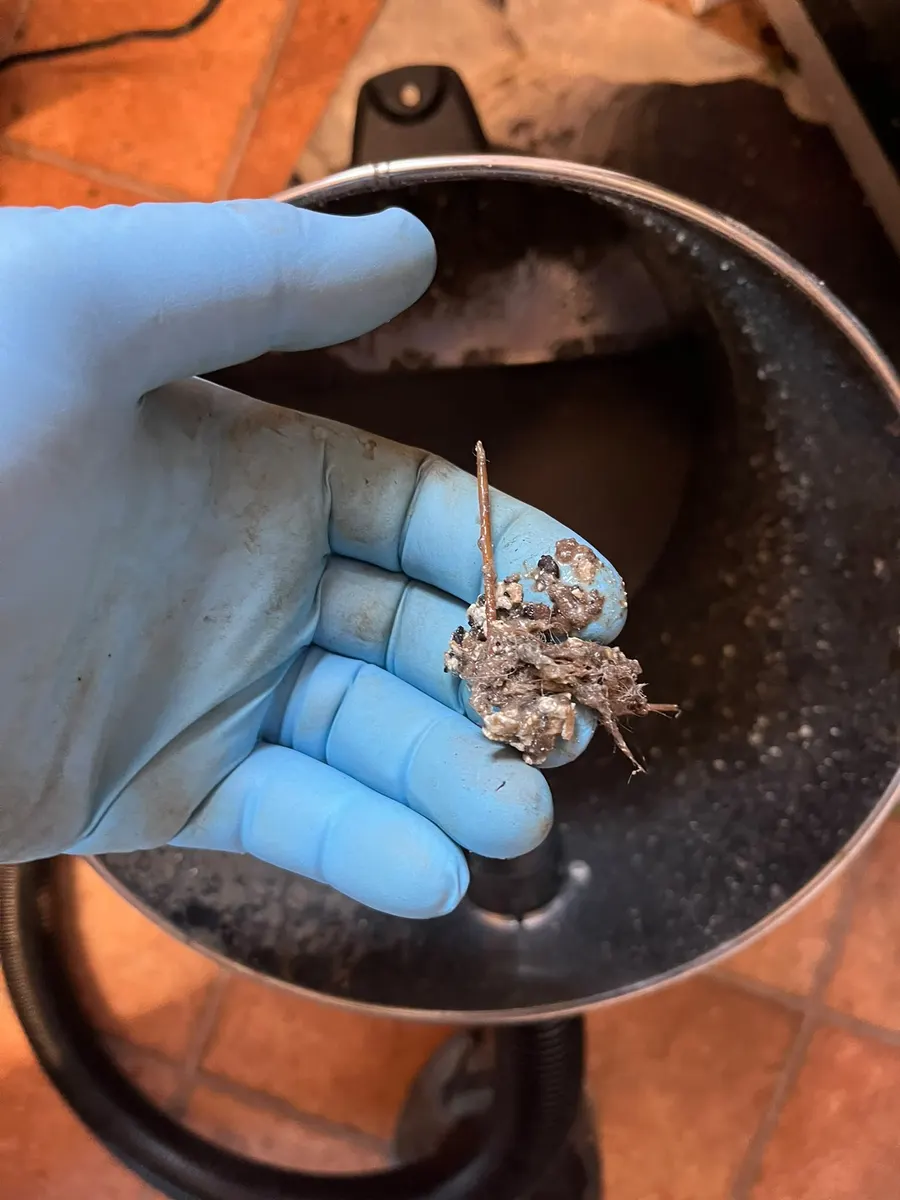
Because most blockages come from what goes down the pipe, the cheapest fix is to stop the cause. Bin wipes, even those labelled flushable, and tip cooking fat into a container rather than the sink. If a drain keeps blocking in the same place, a camera survey will show whether it is a habit or a defect such as a displaced joint or roots. Our drain unblocking page explains the rod, jet and camera options. Homes in Stirling, Falkirk and Alloa can call Brian Robb directly on 07935 496833.
Keep reading: blocked drain in a rented home: landlord or tenant to pay?
Keep reading: Drain blocked with wet wipes? What to do (and not).
Scottish Water and blocked drains: common questions
Do Scottish Water unblock drains for free?
Scottish Water clears blockages in the public sewer, and its factsheet mentions no charge to the householder. It does not clear your private drain, which runs from your home to your property boundary. The homeowner is responsible for that pipe.
How do I report a blocked drain to Scottish Water?
Ring its customer helpline on 0800 0778 778, which its website says is open 24 hours a day, 7 days a week. Say you suspect the public sewer and ask whether it will attend.
Will Scottish Water pay for damage if a sewer blocks?
Only where it is found liable, which depends on negligence. Its factsheet says most blockages are caused by inappropriate items or unforeseen events, and in those cases it is not liable for damage. Contact your own insurer first if you have cover.
What if I paid a firm and the blockage was Scottish Water's?
Keep the engineer's note of where the blockage was, and any camera footage, and ask Scottish Water to reimburse you. If it refuses, you can complain to the Scottish Public Services Ombudsman, which has upheld complaints of this kind.
I rent my home. Who do I tell about a blocked drain?
Your landlord, in writing, and keep a copy. Scottish Water's own factsheet recommends contacting the landlord or council if a property is rented and the problem is private.
Who clears a blocked road gully?
Your local council. Local roads drainage is the council's responsibility, not Scottish Water's or the householder's.
Keep reading: Stirling student lets: pre-term drain check.
Sources
- Scottish Water: Factsheet 13, Flooding responsibility explained (reference SWFact 13 09/20)
- Scottish Water: Flooding and Scottish Water's responsibilities
- Scottish Water: Your pipes FAQ
- Scottish Water: A guide to drains and sewers (December 2023)
- Scottish Public Services Ombudsman: Decision report 201302415 (March 2014)
- Scottish Public Services Ombudsman: Decision report 201305136 (June 2014)
- GOV.UK: Register for VAT
- Consumer Rights Act 2015, section 51 (reasonable price)