
CCTV drain surveys in Central Scotland
CCTV drain surveys in Central Scotland: see the pipe before you pay.
Camera surveys, drain tracing and mapping from Brian Robb, so a repeat blockage, a smell or a planned extension is decided on evidence rather than a guess.
What a CCTV drain survey in Central Scotland actually is
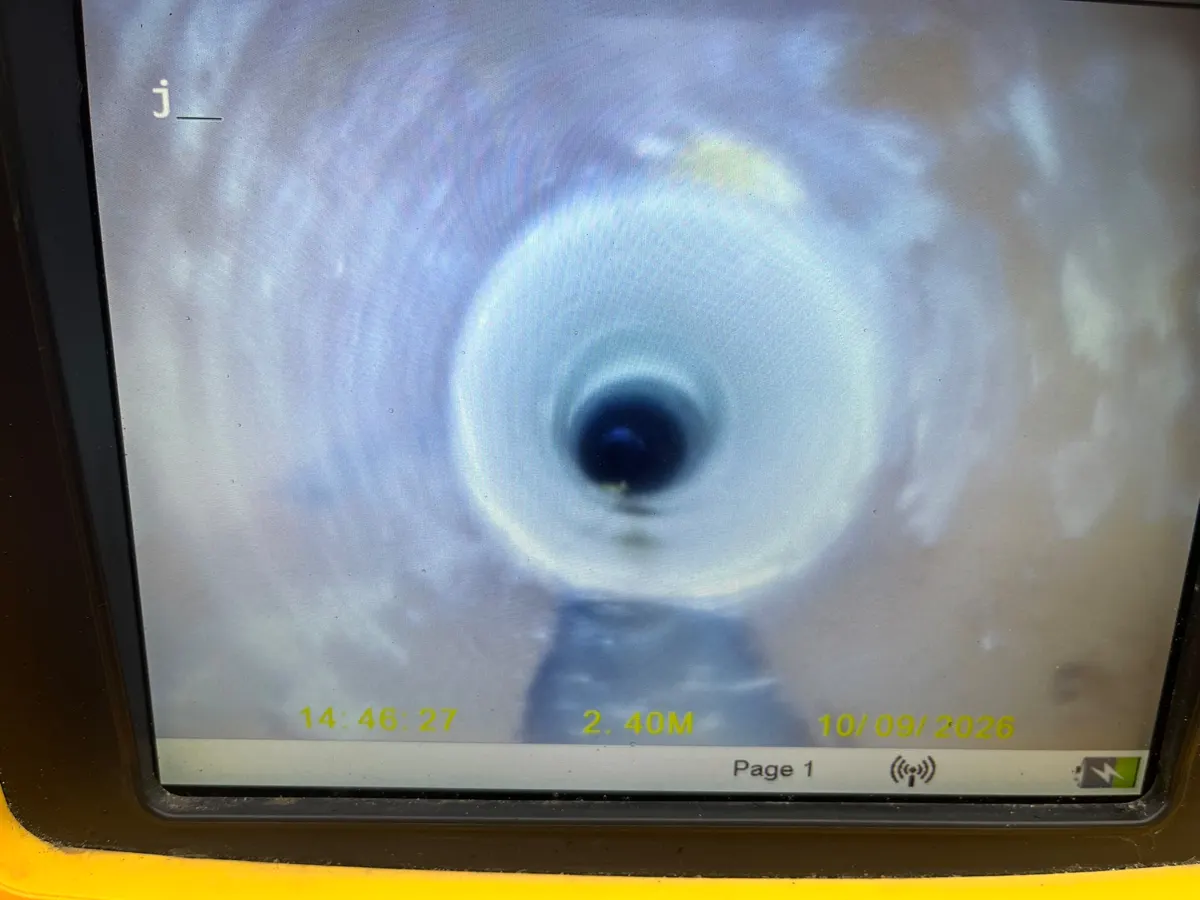
A CCTV drain survey is a small waterproof camera pushed along the inside of a drain on a flexible rod, with the picture shown live on a monitor at the surface. It tells you what is wrong with a pipe you cannot see: where a blockage sits, whether roots have got in, whether a joint has slipped or a section has cracked or collapsed, and which way the pipe actually runs. CB Drainage carries out camera surveys, drain tracing and mapping across Central Scotland from its base in Alloa, alongside the drain unblocking and jetting work that a survey often leads to.
A survey is not a repair and it does not clear anything on its own. Its job is to replace a guess with evidence, so that the next spend, whether that is jetting, a patch repair, digging or nothing at all, is the right one. That is why it is usually worth having before money goes into a repair, and rarely worth having for a one-off blockage that clears and stays clear.
When a camera survey is worth paying for
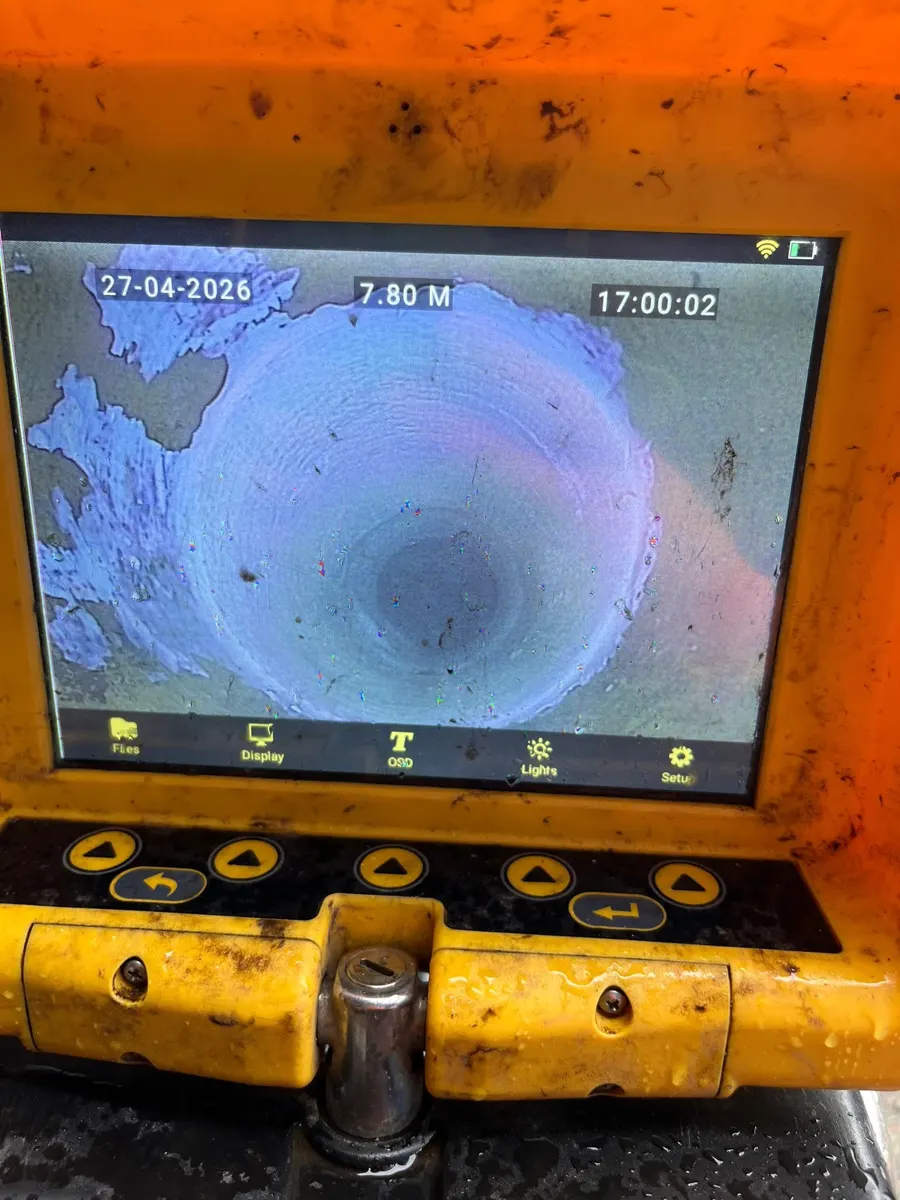
Most drain problems in Central Scotland homes start and end with a blockage that rods or a jetter clears. A camera earns its cost in a narrower set of cases:
- The same drain keeps blocking. Two or three clearances in a year usually mean something in the pipe is catching debris: a root at a joint, a displaced section, a dip that holds water. Clearing it again treats the symptom. A survey finds the cause.
- Rods meet a hard stop. If the engineer cannot get past a point, the camera shows whether it is a solid blockage, a collapse or a change in the pipe.
- Smells, damp patches or sinking ground near the line of a drain, where a leak or a broken pipe is a possibility.
- You are buying a house, extending one or building near a drain, and need to know where the pipe runs and what state it is in before you commit (more on this below).
- You need to know where a drain goes, for example to find out whether a pipe is shared with a neighbour, which is a question about ownership as much as condition.
If none of those applies, a straightforward clearance is usually the cheaper and quicker answer. Our guide to drain rodding or jetting covers that first step, and a blocked drain in the back garden explains the checks you can make yourself before anyone is called.
What a survey report shows, and what each finding usually leads to
A useful survey ends with more than a video. It should tell you what was found, where along the run it was found, and what, if anything, needs doing about it. The table below is a reading guide for the findings that come up most often. It describes the usual next step, not a promise about any particular drain, and the right answer always depends on the pipe, its age and its depth.
| What the camera shows | What it usually means | Usual next step |
|---|---|---|
| A clear, round pipe with clean joints | The pipe itself is sound; any blockage was a one-off | No work. Keep the footage as a record |
| Fat, scale or silt lining the pipe | Build-up narrowing the bore, common on kitchen runs | High-pressure water jetting, then a quick look to confirm it is clear |
| Roots coming through a joint | Roots have found a gap in the joint and will keep growing | Root cutting, then deciding whether the joint needs a patch repair |
| A displaced or open joint | One section has moved against the next, leaving a lip that catches debris | A patch repair if the pipe is otherwise sound, or excavation if not |
| A crack or fracture | The pipe wall is damaged and may leak or get worse | A patch repair for a short defect; excavation for a long or severe one |
| A collapse or badly deformed section | The pipe has lost its shape and cannot be cleared reliably | Excavation and pipe repair at that point |
| Standing water along a length of pipe | A dip in the pipe where water and solids settle | Monitoring if it is mild; relaying the section if it keeps causing blockages |
| The camera cannot pass a point | A blockage or obstruction the rods could not shift | Clearing first, then surveying the rest of the run |
Two things are worth asking about whatever the finding. First, where exactly is it: a defect inside your boundary is yours to fix, while one in the public sewer is Scottish Water's. Second, can the finding be shown on the footage, with the distance along the run, so that anyone quoting for a repair is quoting for the same thing.
Buying, extending or building near a drain in Central Scotland
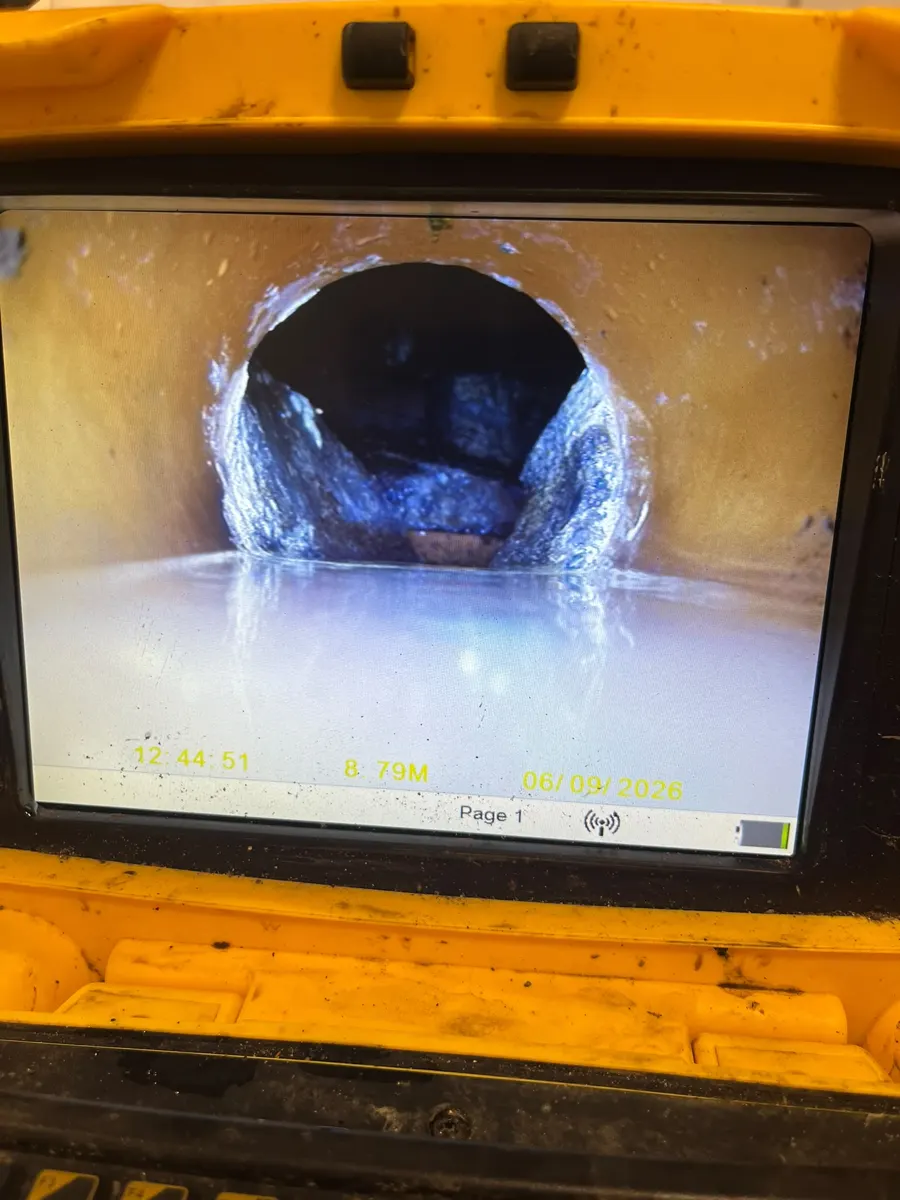
A house purchase in Scotland comes with a Home Report. The Scottish Government says it comprises three documents, an Energy Report, a Property Questionnaire and a Single Survey, and that only surveyors registered with or authorised to practise by the Royal Institution of Chartered Surveyors can produce Single Surveys. A Single Survey is a surveyor's report on the property; a camera survey of the underground drains is a separate job. If the house is older, the drains have a history of trouble or the garden has large trees near the line of the pipe, ask your surveyor what the Single Survey did and did not look at, and consider a camera survey before you buy.
Extensions and new buildings raise a different question: what is underneath. The Scottish building standards technical handbook says every building must not be constructed over an existing drain that is to remain active, unless it is not reasonably practicable to re-route it, and that the condition of any private drain or sewer that is to be built over should be determined. It also says that generally public sewers are not permitted beneath buildings, and that permission will be required from Scottish Water for any work to a public sewer. Section 21 of the Sewerage (Scotland) Act 1968 says no building shall be erected over a sewer vested in Scottish Water without its consent, which shall not be unreasonably withheld.
In practice that means finding out where the drains run and what state they are in before the footings are designed. A survey with drain tracing gives your designer the route and the condition in one visit.
Whose pipe the camera is looking at
In Scotland a drain has two owners along its length. Scottish Water says the private drain carries waste water from your home to your property boundary, where it meets the main public sewer, and that the homeowner is responsible for that pipe. Citizens Advice Scotland says Scottish Water maintains and repairs public sewers, and that where pipes are shared by the owners of several properties, for example in flats, the owners are jointly responsible for repairs and maintenance.
A survey is often the quickest way to settle which of those applies to your problem. If the defect is on the public side, Scottish Water deals with it. If it is on a shared section, the owners who share it share the job. If it is on your own branch, the footage is what you take to whoever quotes for the repair. Our guide to who is responsible for blocked drains in Scotland goes into this in more detail.
Drain problem in Central Scotland? Tell Brian what is happening and where you are, with a photo if you can.
Request a quote Call 07935 496833What a CCTV drain survey costs across the market
These are published market ranges, not CB Drainage prices. MyJobQuote, in a guide last updated on 3 November 2026, puts a basic CCTV drain survey at around £90 and a full survey with drain mapping and a written report at £250 to £350. Fantastic Services' 2026 guide, which quotes prices including VAT, puts a CCTV survey at £90 to £200. The spread is mostly about what you get: a quick look down one run costs far less than a mapped survey of the whole system with a written report.
Ask before the camera goes in whether the price includes VAT, how many runs it covers, and whether you get the footage and a written report or only a verbal summary. If the survey is part of a visit to clear a blockage, ask whether it is charged as a separate line.
What to ask for from any drain survey
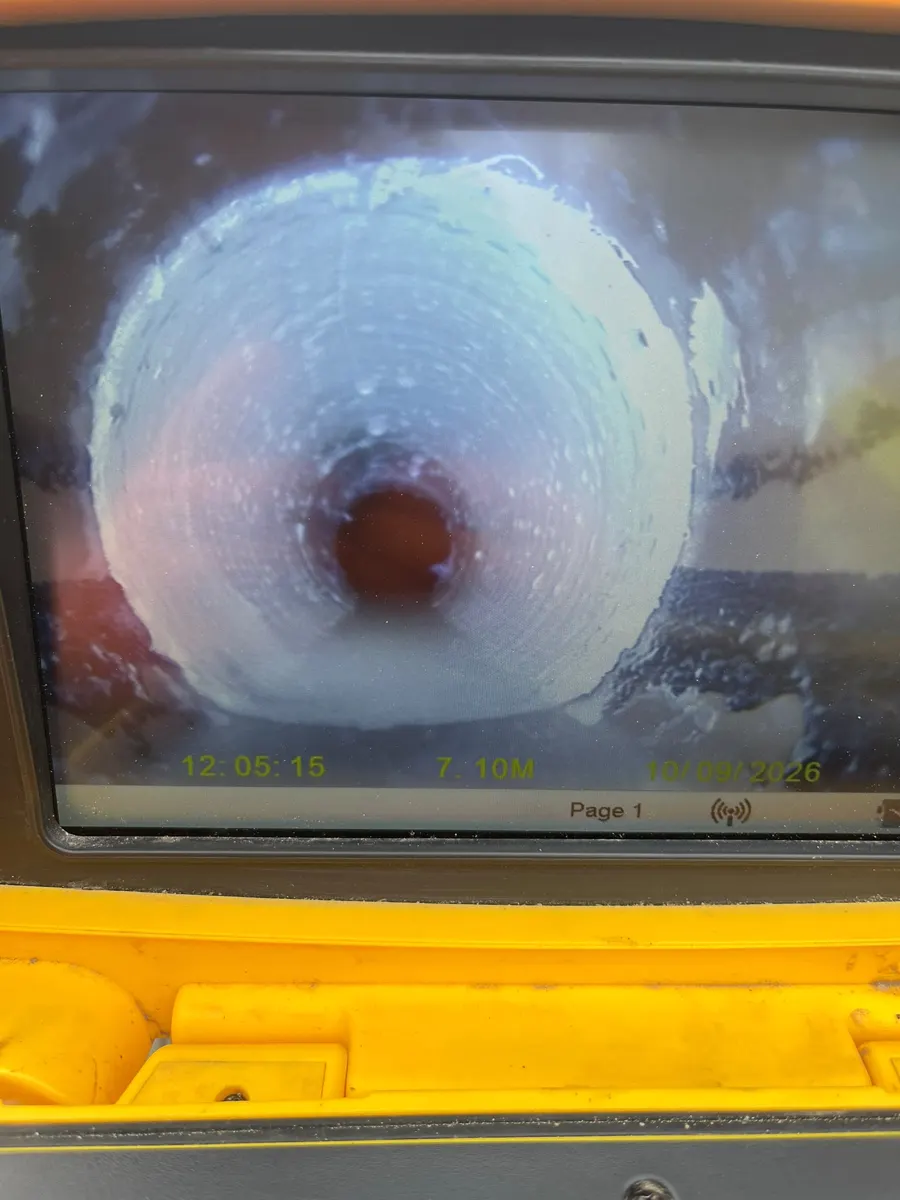
A survey is only as useful as what you are left holding afterwards. Whoever carries it out, ask for these:
- The footage, or stills of every defect, so a second opinion or a second quote is possible.
- Distances along the run for each finding, measured from a named access point, so a repair can be placed without digging in the wrong spot.
- A plain description of each defect and where it sits relative to your boundary.
- A recommendation that is separate from the quote, so you can see what is needed now, what can wait and what needs nothing.
- A sketch of the route if tracing or mapping was part of the job.
Brian Robb is Water Jetting Association registered (276420) and EUSR registered (663530). If the survey points to a repair, our pages on drain unblocking and the advice articles below cover what usually comes next.
CCTV drain surveys across Central Scotland
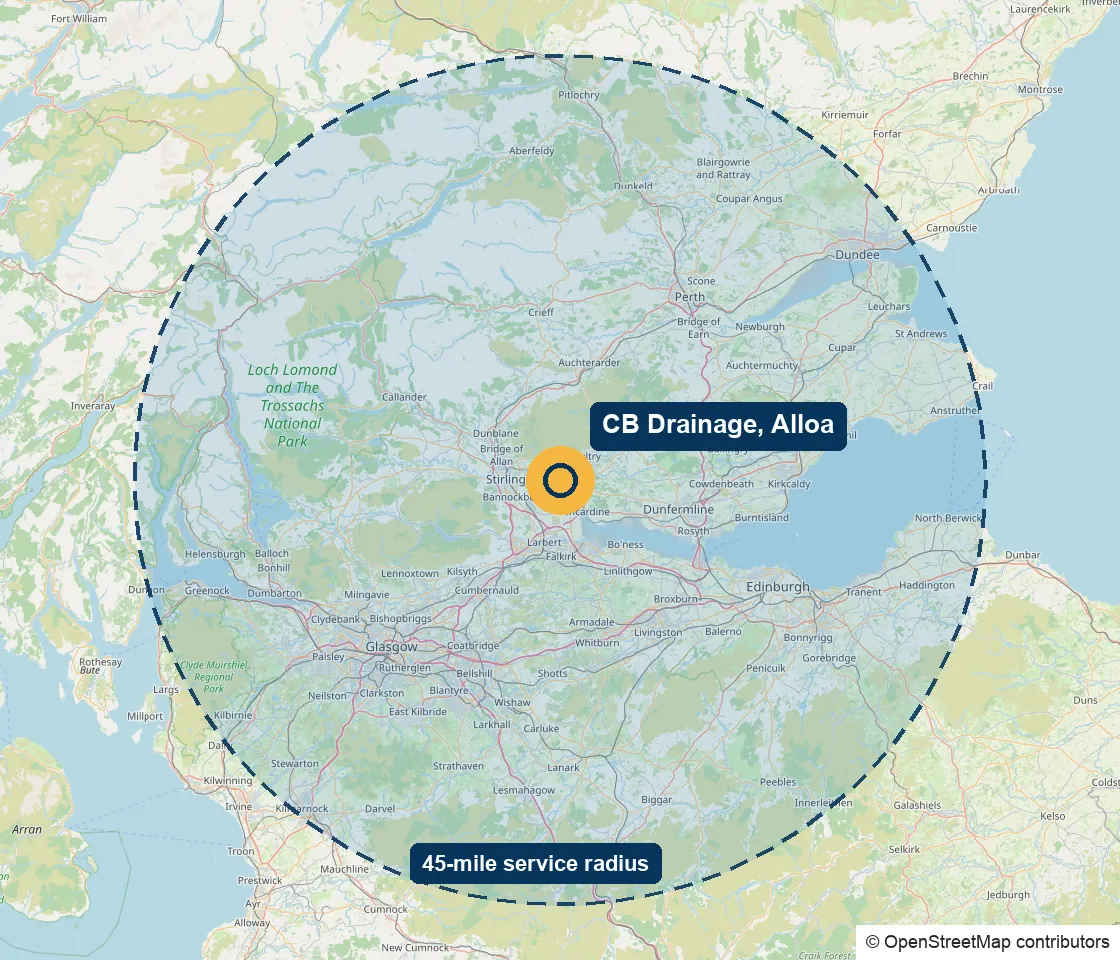
CB Drainage is based in Alloa and covers a 45-mile radius across Central Scotland. Local pages cover Alloa, Stirling and Falkirk, and the wider area runs across Clackmannanshire, Stirling, Falkirk and the Forth Valley. For the costs side of a blocked drain, see drain unblocking in Alloa: what it costs and drain unblocking cost in Stirling and Falkirk.
CCTV drain surveys in Central Scotland: common questions
When is a CCTV drain survey worth it?
When the same drain keeps blocking, when rods meet a hard stop, when there are smells, damp or sinking ground near a drain, or before you buy, extend or build near one. For a single blockage that clears and stays clear, a survey is usually not needed.
How much does a CCTV drain survey cost?
These are market ranges, not CB Drainage prices. MyJobQuote, updated 3 November 2026, puts a basic survey at around £90 and a full survey with mapping and a written report at £250 to £350. Fantastic Services' 2026 guide, including VAT, puts it at £90 to £200. Ask what the price covers and whether VAT is included.
Does the Home Report include a drain survey?
The Scottish Government says the Home Report comprises an Energy Report, a Property Questionnaire and a Single Survey produced by a RICS surveyor. A camera survey of the underground drains is a separate job, so ask your surveyor what the Single Survey covered if the drains are a concern.
Can I build an extension over a drain in Scotland?
The building standards technical handbook says a building must not be constructed over an existing drain that is to remain active unless re-routing it is not reasonably practicable, and that public sewers are generally not permitted beneath buildings. Building over a sewer vested in Scottish Water needs its consent under section 21 of the Sewerage (Scotland) Act 1968.
Who pays if the survey finds a problem?
It depends where the defect is. Scottish Water says the private drain to your property boundary is the homeowner's responsibility, and Citizens Advice Scotland says Scottish Water maintains public sewers and owners of shared pipes are jointly responsible for them. The survey footage, with distances along the run, is how that is settled.
Sources
- Scottish Water: Your pipes FAQ, for who owns the private drain. Checked 16 November 2026.
- Citizens Advice Scotland: Public sewerage, for public sewers and shared pipes. Checked 16 November 2026.
- Scottish Government: Building standards technical handbook 2022 (domestic), 3.5 Existing drains, for building over drains and sewers. Checked 16 November 2026.
- legislation.gov.uk: Sewerage (Scotland) Act 1968, section 21, for Scottish Water's consent to build over a sewer. Checked 16 November 2026.
- Scottish Government: Home Report, for the three documents and who produces the Single Survey. Checked 16 November 2026.
- MyJobQuote: Drain clearance cost, last updated 3 November 2026, for the CCTV survey ranges. Checked 16 November 2026.
- Fantastic Services: drain unblocking cost guide (2026), for the CCTV survey range including VAT. Checked 16 November 2026.
Areas covered
CB Drainage is based at 80 Churchill Street, Alloa, FK10 2JG, and covers a 45-mile radius across Central Scotland: Clackmannanshire, Stirling, Falkirk and the Forth Valley, out to Glasgow, Edinburgh, Perth and Dunfermline.
 Open in Google Maps© OpenStreetMap contributors
Clear the blockage, find the cause, fix it properly.
Brian Robb, 80 Churchill Street, Alloa, FK10 2JG. Phone 07935 496833 or email enquiries-cbdrainage@hotmail.com.
Request a quote Call 07935 496833