
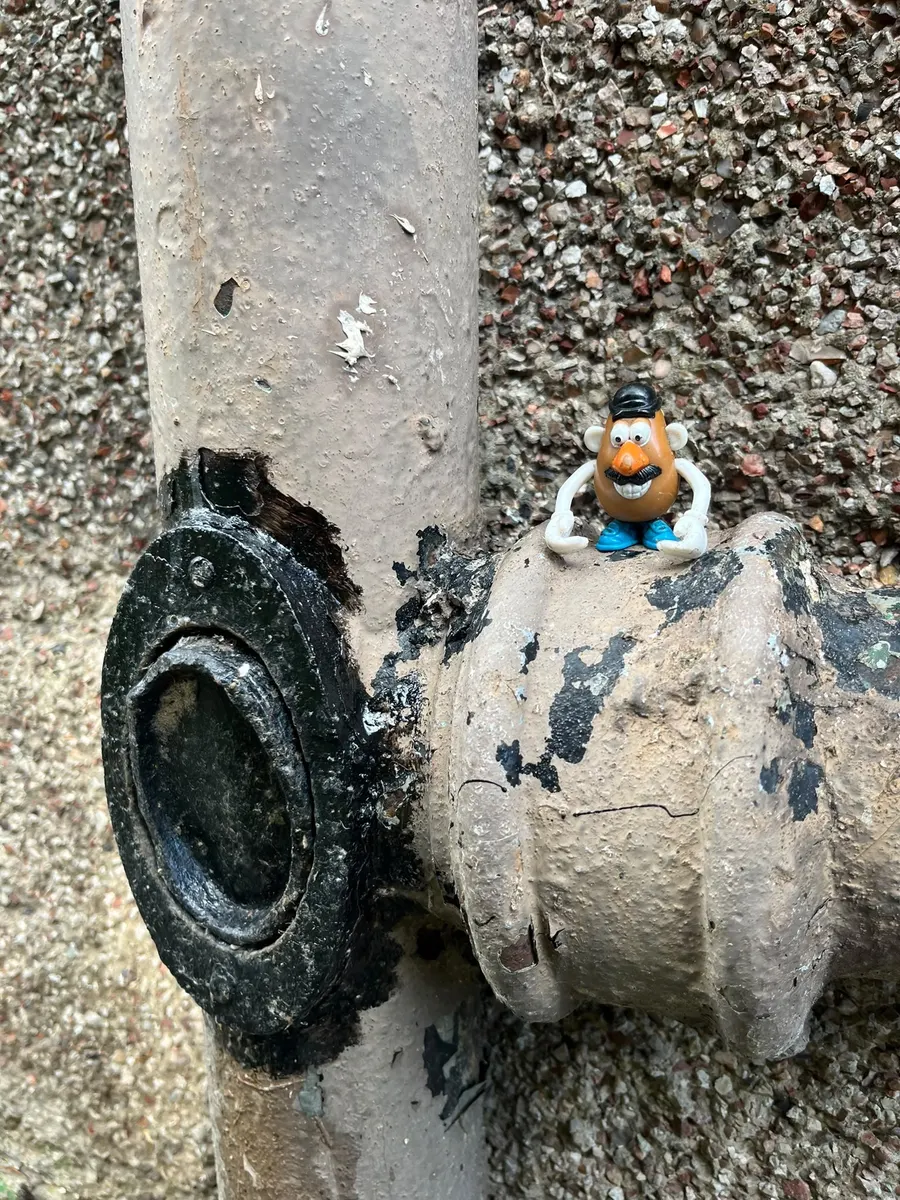
A blocked sink and a blocked toilet at the same time usually mean one shared pipe is the problem, but "the main drain" is not one thing in Scotland. Scottish Water says the drain from your house to the public sewer is yours up to your boundary, and the public sewer beyond it is Scottish Water's, so the first job is to work out which side of the boundary the blockage sits on. If the fittings affected are only inside your home, it is yours, and the market price to clear it is about £100 to £150 for rodding or £150 to £200 for rodding and jetting together, according to MyJobQuote's page of 22 September 2026. If the chamber nearest the boundary is full and the neighbours are affected too, it may be Scottish Water's. This guide gives a two-minute fixture test, a table that turns what you see into what it usually means, a worked sum showing what a wrong first call costs, and a list of what to send for a fixed quote. If you would rather hand it over, our drain unblocking service covers Alloa, Falkirk, Stirling and the rest of Central Scotland.
What "main drain" means in Scotland
Many guides that rank for this question were written for the United States or for England, where a "main sewer line" is a single thing. In Scotland the same pipe has two owners. Scottish Water says the waste water drain which runs from your house to the public sewer is usually about 4 inches wide, that it is designed to take used water from sinks, showers and baths and pee, poo and toilet paper from the toilet, and that the homeowner is responsible for it. Its guide to drains and sewers adds that from the point where the drain leaves your curtilage, or joins drains from another property's curtilage, it becomes a public sewer.
Citizens Advice Scotland puts the same rule from the other direction. Homeowners and landlords are responsible for household waste pipes up to where they connect with the public sewer, normally at the property boundary, and Scottish Water maintains the public sewer from that point. If there is a blockage on the private side, the homeowner or landlord arranges and pays for the repair. So when a rival says "call your water company about the main drain", for most Scottish homes that is wrong for the part of the pipe inside your boundary.
Two fittings that block together do not tell you which side of the boundary the blockage is on. They tell you the blockage is downstream of both of them, on a pipe they share. The rest of this guide narrows that down. A pipe fed by every fitting in the house is also why one stubborn plunger session on the toilet will not help: Scottish Water says all the fittings in the house are connected and carried to the main sewer by the same private pipe, so a blockage past the point where they join holds them all back.
The two-minute fixture test
Do this before anyone is booked, and write down what you see, because it is the first thing a drainage engineer asks. This is our own rule of thumb, not an official procedure.
- Stop adding water. Do not flush again, and leave the washing machine and dishwasher off. A pipe that is already full only fills the next fitting.
- Note which fittings are affected and where they are. A downstairs toilet and a ground floor sink slowing together share the lowest run. Write down the rooms.
- Run a small amount of water in a fitting that still works. If the toilet or the bath gurgles or bubbles, the water from the working fitting is pushing air back through the shared pipe.
- Look at the lowest fitting. The fitting closest to the blockage along the pipe is usually the first to back up. A ground floor shower tray or floor drain that fills before anything else is a strong hint the blockage is low and downstream.
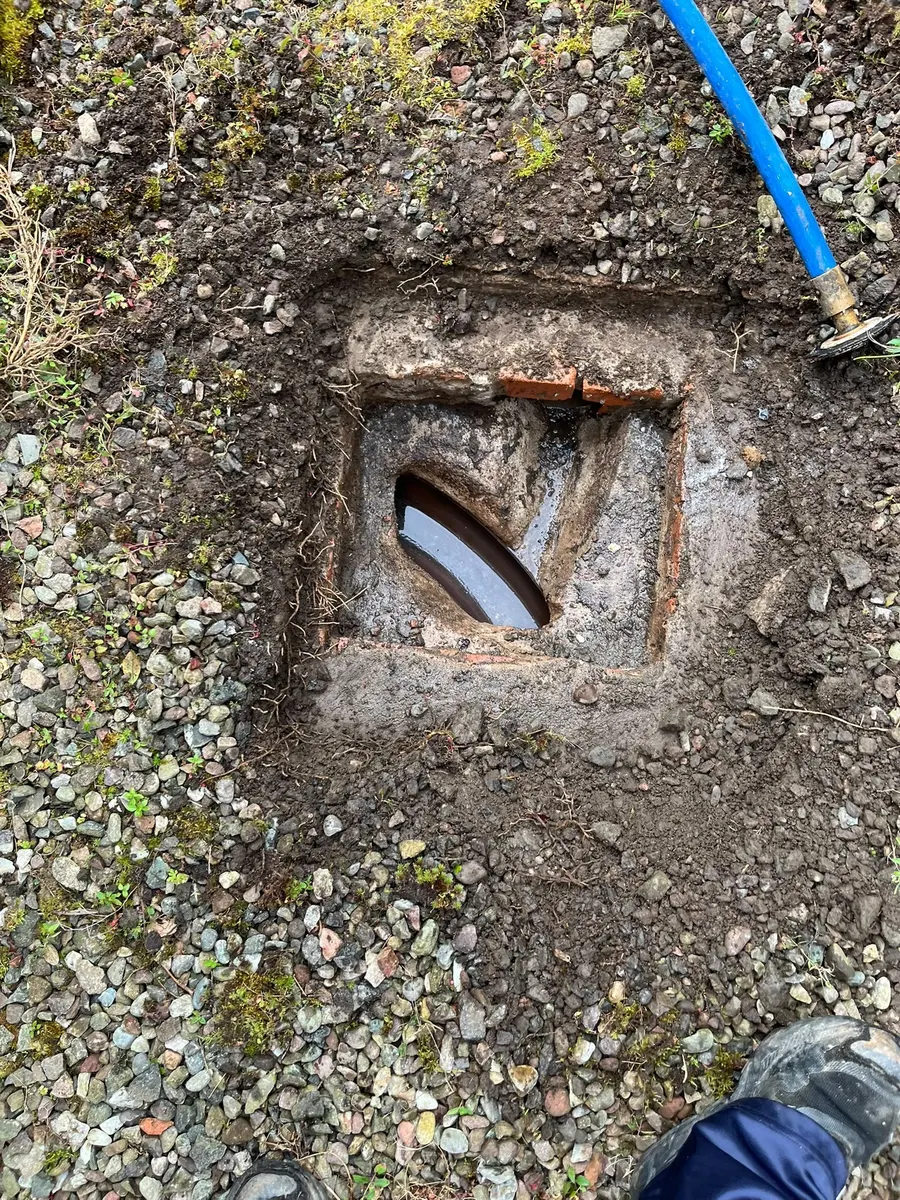
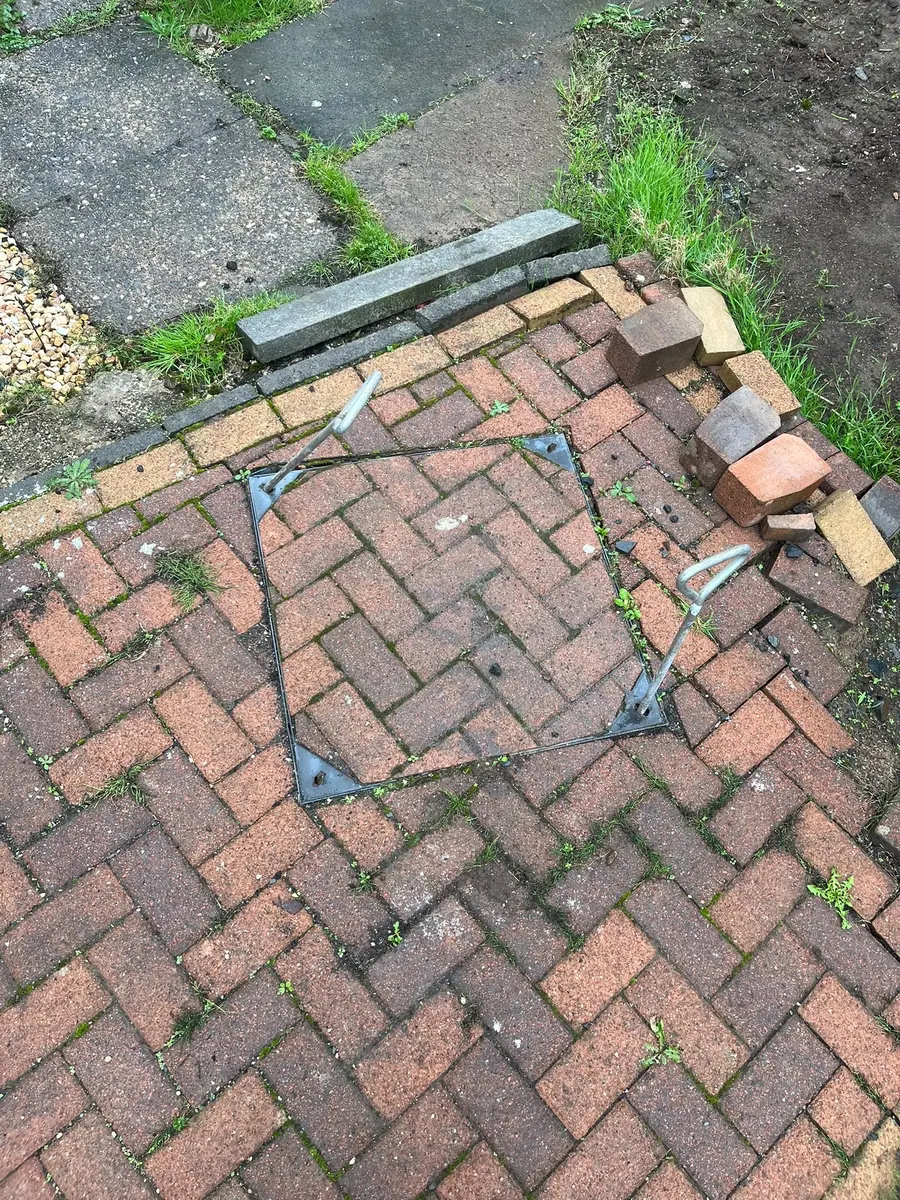
- Lift the chamber lid nearest the house, only if it comes up easily, and look from above. Do not climb in and do not lean in. Our guide to checking the chamber for a blocked toilet covers how to read it and where to stop.
- Ask next door. If a neighbour on the same street has the same problem today, tell Scottish Water before you pay anyone.
What you see, what it usually means, who to call
The table below turns the test into a reading. It is our own interpretation, built from the shared-pipe and boundary facts above, so treat it as a strong hint and not proof. Only a camera or a rod on the drain confirms the position.
| What you see | What it usually means | Who normally deals with it |
|---|---|---|
| Sink and toilet both slow or blocked, other fittings fine | A branch that serves just those two, or a blockage in each. Not yet a drain-wide problem | You or your landlord. Start with an internal unblock at the fittings |
| Sink and toilet blocked, and the bath or basin gurgles when either is used | The blockage is on a pipe the fittings share, past where they join | You or your landlord. Look at the nearest chamber, then call a drainage engineer |
| Toilet, sink and bath all slow, the nearest chamber is full | The blockage is downstream of that chamber, further along towards the boundary | You or your landlord, unless the next chamber towards the boundary is also full |
| Nearest chamber dry, fittings blocked | The blockage is between the fittings and that chamber, inside the house pipework or short underground run | You or your landlord. Rodding from the fittings or a camera survey |
| Last chamber before the boundary is full and neighbours are affected | The blockage may be in the public sewer | Scottish Water, on 0800 0778 778. Ask a firm to confirm which side with a camera if you are not sure |
| Flats, shared pipe, other flats affected | A shared pipe inside the curtilage, which stays private | The owners jointly. Citizens Advice Scotland says the rules on paying should be in your title deeds |
| Sewage coming up through a floor drain or lid, or a strong smell | A full drain or sewer. Do not use more water | Report to Scottish Water if sewage-contaminated flooding appears, and call a drainage engineer for the private side |
Scottish Water's guide gives 0800 0778778 for reporting a flooding incident which appears to be contaminated with sewage, and its sewer flooding page lists 0800 0778 778, available 24 hours a day, seven days a week. Its sewer flooding page also says a drain or sewer can overflow either because of heavy rain or because something has blocked it. If sewage is already inside the house, do not wait for the table.
A worked sum: what the wrong first call costs
These are UK market ranges, not CB Drainage prices. The scenario is an illustration, not a real job. A household finds the kitchen sink and the downstairs toilet both blocked, the bath gurgling. They book a plumber to clear the toilet at the pan first.
| Job | MyJobQuote, updated 22 September 2026, VAT not stated | Fantastic Services, 2026, including VAT, rest of UK |
|---|---|---|
| Clear at the pan with a snake | £75 to £100 | Unclogging a toilet £30 to £75 |
| Rod the outside drain | £100 to £150 | £60 to £90 |
| Jet the outside drain | £150 to £175 | £70 to £125 |
| Rod and jet together | £150 to £200 | Typical drain unblock, all in: £80 to £250 |
| Emergency call-out for a blocked toilet | £100 to £200 | Evening, weekend and short notice cost more |
| Camera survey for repeat blockages | £90 to £500 | Adds £90 to £200 |
The pan is cleared, but the drain is the problem, so a second visit rods the outside drain. Using MyJobQuote's figures that is £75 plus £100 at the low end, £175, and £100 plus £150 at the high end, £250. Had the fixture test and the chamber pointed at the drain first, the visit would be rodding alone, £100 to £150, so the wrong first call cost £75 to £100 extra. Fantastic Services' guide says its figures include VAT and that a typical drain unblock outside London is £80 to £250, which brackets the same job.
VAT is the second sum. GOV.UK sets the standard rate at 20% and says a business must register once its taxable turnover over the last 12 months goes over £90,000, so a small firm under the threshold has no VAT to add. If a registered firm quotes £150 for rodding before VAT, VAT is £30 and the total is £180. MyJobQuote does not say whether its figures include VAT, so ask each firm for the total, in writing.
Whose job it is, and what the law gives Scottish Water
For most homes, a blockage on the private drain is the owner's to fix, and the landlord's if you rent. Scottish Water's guide says that for private pipework you should contact a licensed plumber, or your landlord or council if the property is rented, and our guide to landlord or tenant to pay covers the Scottish position for tenants. Scottish Water says it supports the WaterSafe scheme for finding qualified plumbing and heating professionals.
Section 15 of the Sewerage (Scotland) Act 1968 matters if a defect on a private drain is left alone. It says that where it appears to Scottish Water or the local authority that drains serving premises (other than drains vested in Scottish Water) are defective, they may by notice require the owner or occupier to remedy the defect. Legislation.gov.uk showed section 15 as up to date on 13 November 2026. We read that as a reason to fix a known fault on your own drain before it is raised for you.
For a shared pipe, such as flats and some terraces, Citizens Advice Scotland says owners are jointly responsible for repairs and the rules on payment should be in the title deeds. Our guide to who is responsible for blocked drains in Scotland sets out the full definitions.
Think it is the shared drain?
Ask for a look before you book two visits
Call Brian or use the quote form, describe the fittings and the gurgling, and ask what he would try first.
Request a quoteCall 07935 496833Why two fittings block together
Most of the causes are ordinary. Scottish Water says there are over 36,000 blocked drains and sewers across Scotland every year and that around 80% of those are caused by inappropriate items going down the toilet or by fat, oil and grease going down the sink. That is the clue to a sink and toilet failing together: one fitting adds grease, the other adds paper or wipes, and they meet in the same pipe. See our guide to drains blocked with wet wipes and the cost guide for a slow or blocked sink for the single-fitting case.
Other causes that can stop a shared pipe are a collapsed or displaced section, roots, or a build-up of scale on old pipework. These are why a drain that blocks again within weeks deserves a camera before a second clear-out. Fantastic Services says a camera survey can identify causes such as a collapsed pipe, tree roots or a build-up of fat, and that it adds cost but can prevent repeat call-outs.
Where a householder should stop
Looking and running a tap are safe. Going further is not always. In our view, stop at the first of these.
- Sewage is coming up through a floor drain, a lid or a fitting, or there is a smell that makes you step back.
- More than one chamber is full, or a chamber is too deep to see the bottom.
- Rods meet a hard stop that does not move, or the level does not drop.
- The problem has come back since the last clear-out.
Do not climb into a chamber. The point of stopping is cost as well as safety: a stuck rod or a broken pipe turns a small job into a larger one.
What to send for a fixed quote
A short message with the following gets a firm to a number it can stand behind.
- Which fittings are affected, which rooms they are in, and which one backed up first.
- Whether any other fitting gurgles or bubbles when you run water.
- A photograph of the nearest chamber from above, if you could lift it safely, showing the water level.
- Whether the neighbours are affected, and whether it has blocked before.
- Your town and whether you own the property or rent. Brian covers Alloa, Falkirk and Stirling among other Central Scotland towns.
Then ask what the price covers: the method, whether a camera survey is included or extra, the call-out charge, VAT, and what happens if the blockage turns out to be a broken pipe that needs a repair quote. If you would rather start with a call, the drain unblocking page explains what Brian does, and the advice hub has the rest of our guides.
Customer reviews
What customers say
Arrived within an hour, identified the issue and cleared it.
Fast response time and very professional.
Blocked sink and toilet: common questions
Why are my sink and toilet blocked at the same time?
Usually because they drain into the same pipe and the blockage is further along it than both. Scottish Water says all the fittings in a house are connected to the private drain that carries waste to the public sewer, so a blockage past the point where they join holds several fittings back. Gurgling in a third fitting when you run water is another sign of a shared pipe.
Is a blocked sink and toilet the main drain in Scotland?
It can be, but the main drain has two owners here. Scottish Water says the private drain from your house to the public sewer is the homeowner's responsibility and that it becomes a public sewer where it leaves your curtilage. Citizens Advice Scotland says homeowners and landlords are responsible for waste pipes up to where they connect with the public sewer, normally at the boundary.
Who do I call if the blockage is in the public sewer?
Scottish Water. Its guide gives 0800 0778778 for reporting flooding that appears to be contaminated with sewage, and its sewer flooding page lists 0800 0778 778, available 24 hours a day, seven days a week. If you are not sure which side of the boundary the blockage is on, a camera survey from a drainage firm can show it.
How much does it cost to clear a blocked drain serving a sink and toilet?
These are market ranges and not CB Drainage prices. MyJobQuote's page last updated on 22 September 2026 gives £100 to £150 for rodding an outside drain, £150 to £175 for jetting and £150 to £200 for rodding and jetting together, VAT not stated. Fantastic Services' 2026 guide, which includes VAT, gives £80 to £250 for a typical drain unblock outside London.
Can I fix it myself?
You can stop adding water, note which fittings are affected and look into the nearest chamber from above if the lid lifts easily. Do not climb into a chamber. If sewage is coming up, rods meet a hard stop or the problem has come back, stop and call a drainage engineer.
Sources
- Scottish Water: A guide to drains and sewers, for the 4 inch drain, where a drain becomes a public sewer, the 36,000 blockages and 80% figure, the sewage flooding number and the licensed plumber advice. Checked 13 November 2026.
- Scottish Water: Your pipes FAQ, for who owns the private drain and the public sewer. Checked 13 November 2026.
- Scottish Water: Sewer flooding, for how blocked or full drains and sewers overflow and the 24 hour helpline. Checked 13 November 2026.
- Citizens Advice Scotland: Public sewerage, for who maintains public sewers, who pays for a private blockage and shared pipes. Checked 13 November 2026.
- legislation.gov.uk: Sewerage (Scotland) Act 1968, section 15, for the notice power over defective private drains. Checked 13 November 2026.
- MyJobQuote: Cost of unblocking a toilet, last updated 22 September 2026, for the pan, rodding, jetting, emergency and survey ranges. Checked 13 November 2026.
- Fantastic Services: How much does it cost to unblock a drain? (2026 UK price guide), for the ranges including VAT and the camera survey figure. Checked 13 November 2026.
- GOV.UK: VAT rates and GOV.UK: When to register for VAT, for the 20% rate and the £90,000 threshold. Checked 13 November 2026.